
This site contains affiliate links. I may earn a small commission, at no extra cost to you. Please view the disclosure for more information
A small apartment can be clean, organized, and still feel unfinished. This is one of the most common frustrations in smaller spaces. You declutter, you organize, you build systems that keep everything in place, and yet something still feels slightly off. The space functions well, but it doesn’t feel complete.
That difference isn’t about effort. It’s about cohesion. A space feels “put together” when everything within it works together visually and functionally at the same time. It’s not about having more. It’s about how what you already have connects, repeats, and supports the overall environment.
In a small apartment, this matters more than it does in larger homes.
There’s no excess space to soften inconsistencies. Every object exists within the same visual field. Furniture, storage, decor, and everyday items all contribute to how the space is perceived. When something feels slightly disconnected, the entire apartment reflects it.
If you’ve already created structure through Small Apartment Storage Solutions That Actually Fix Daily Clutter, you’ve handled where things go. If you’ve worked through Small Apartment Organization Systems That Keep Your Home Effortlessly Clean, you’ve started building systems that maintain order.
This is the next step. This is where your apartment stops feeling managed and starts feeling intentional.
How Visual Hierarchy Changes Everything

One of the main reasons a space feels unfinished is because everything holds the same level of attention.
There’s no visual priority. When every object competes equally, the space feels scattered, even if it’s technically organized. Your eye moves constantly without settling, which creates a subtle sense of imbalance that makes the space feel incomplete.
In a well-structured apartment, attention is guided. Certain elements naturally stand out, while others support them, which creates structure without requiring additional items or more complexity.
In small apartments, this becomes even more important because everything is visible at once. Creating hierarchy doesn’t mean adding bold statement pieces, it often comes from adjusting placement, contrast, and scale so that one element becomes the natural focal point.
A focal point gives the room a center and allows everything else to relate to something instead of existing independently.
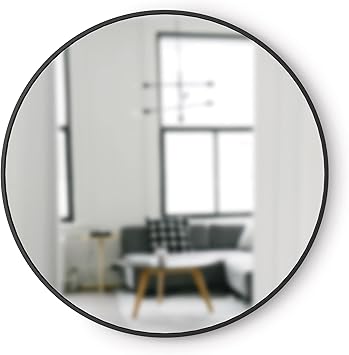
Once a focal point is established, the rest of the space begins to fall into place more naturally. Furniture feels positioned instead of placed, and decor starts to feel intentional rather than added.
The Power of Repetition in Small Spaces
Repetition is what connects your apartment without making it feel overly styled. Without repetition, even well-chosen items feel unrelated. When materials, tones, or shapes repeat throughout your space, they create quiet connections between areas. These connections allow your apartment to feel cohesive without requiring everything to match exactly.
In a small apartment, this is essential because the entire space is experienced at once. A repeated material, like wood, metal, or fabric, creates continuity across rooms that don’t have physical separation. It allows your living room, bedroom, and kitchen to feel like part of the same environment.

This type of repetition doesn’t stand out individually, but collectively it creates stability.
Why Scale and Proportion Matter More Than Quantity
A space can have very few items and still feel off. This usually comes down to proportion. When items don’t relate to each other in size, the space loses balance. A piece that’s too large dominates the room, while something too small disappears and feels ineffective.
In small apartments, these differences are more noticeable because everything sits closer together. Proportion determines whether a space feels stable or unsettled.
A well-proportioned piece like the VASAGLE Round Coffee Table with Storage Shelf works because it fits the scale of the room without overwhelming it. It provides function while still allowing surrounding space to remain open.

When proportion is correct, the space feels grounded. This is similar to how furniture placement works in How to Arrange Furniture in a Small Living Room (Step-by-Step), where balance is what makes a layout feel natural rather than forced.
Layering Instead of Adding More
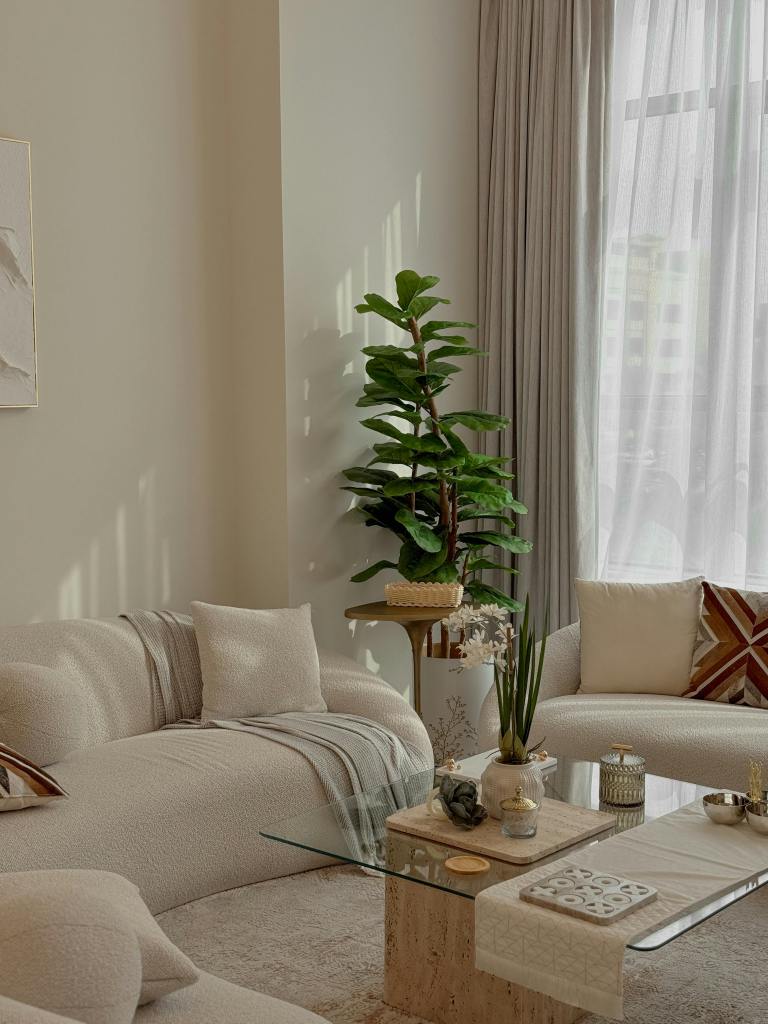
When a space feels unfinished, the instinct is often to add something new, more decor, more furniture, more detail. But what actually improves a space is layering, not adding but layering what you already have.
Layering creates depth by combining textures and materials within what already exists. It builds richness without increasing clutter. This is especially important in small apartments where every addition has a visual impact.
Instead of introducing new items, layering enhances the ones you already have.

Layering works because it deepens the space rather than expanding it. It’s the difference between a space that feels flat and one that feels complete.
Color Temperature and Why It Affects Cohesion

One of the most overlooked elements in small apartments is color temperature. This goes beyond color palette. It includes lighting, materials, and finishes. When tones are inconsistent, mixing warm and cool without intention, the space feels slightly disjointed.
In a small apartment, this becomes more noticeable because everything is seen together. A consistent temperature creates a unified atmosphere. It allows materials to relate to each other instead of competing.
Lighting plays a major role in this. Warm lighting softens a space and creates continuity, while cooler lighting can make a space feel sharper but less cohesive if not balanced properly.
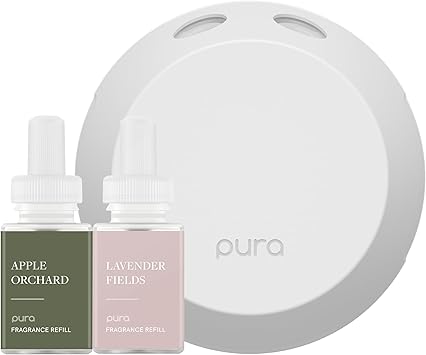
This is what makes a space feel aligned on multiple levels.
How Transitions Between Areas Affect the Whole Space
In a small apartment, there are very few clear boundaries between spaces. Because of this, transitions become more important than separation. The way one area leads into another determines whether the apartment feels cohesive or disconnected. Abrupt changes in style, material, or layout create breaks in the space. Smooth transitions allow the eye to move naturally, which makes the apartment feel larger and more intentional.
Transitions can be subtle. Repeating materials, maintaining consistent spacing, and aligning furniture all contribute to a smoother flow. When transitions are handled well, the apartment feels continuous instead of divided.
Reducing Visual Density Without Removing Function
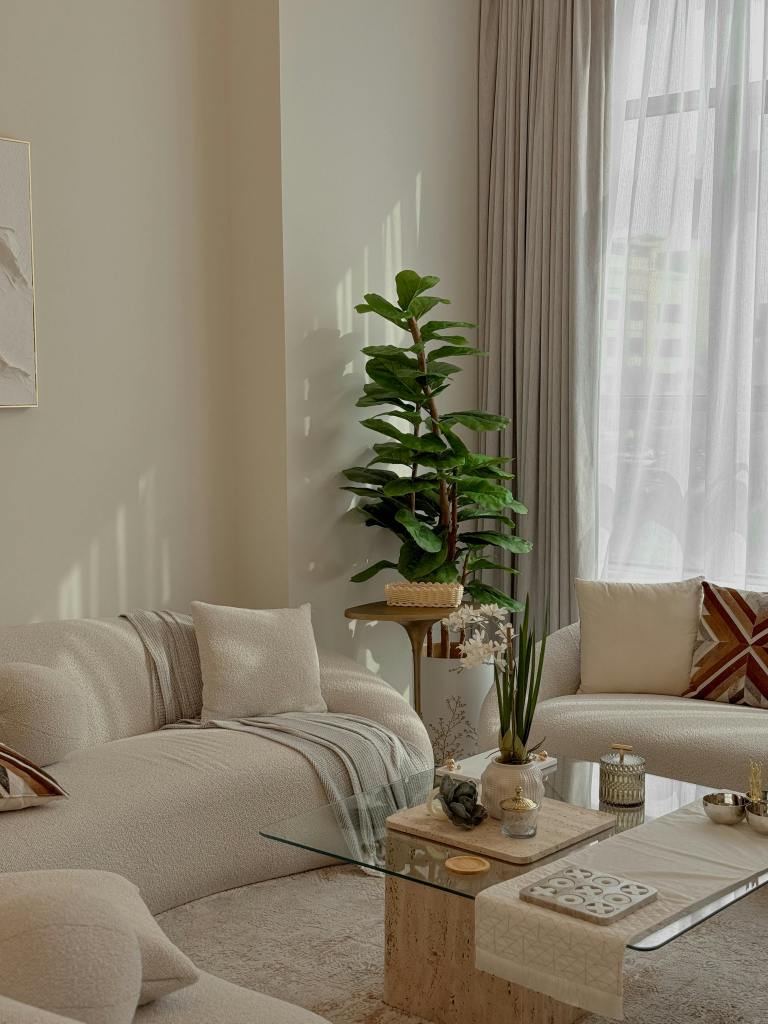
A space can be organized and still feel cluttered. This often comes from visual density rather than actual clutter.
Too many small items create noise, even when everything is in place, excessive detail makes the space feel busy and overwhelming. Reducing visual density doesn’t mean removing functionality, it means simplifying how items are presented.
Grouping items, limiting variation, and creating contained arrangements reduces visual pressure while maintaining usability.

The Difference Between “Styled” and “Put Together”
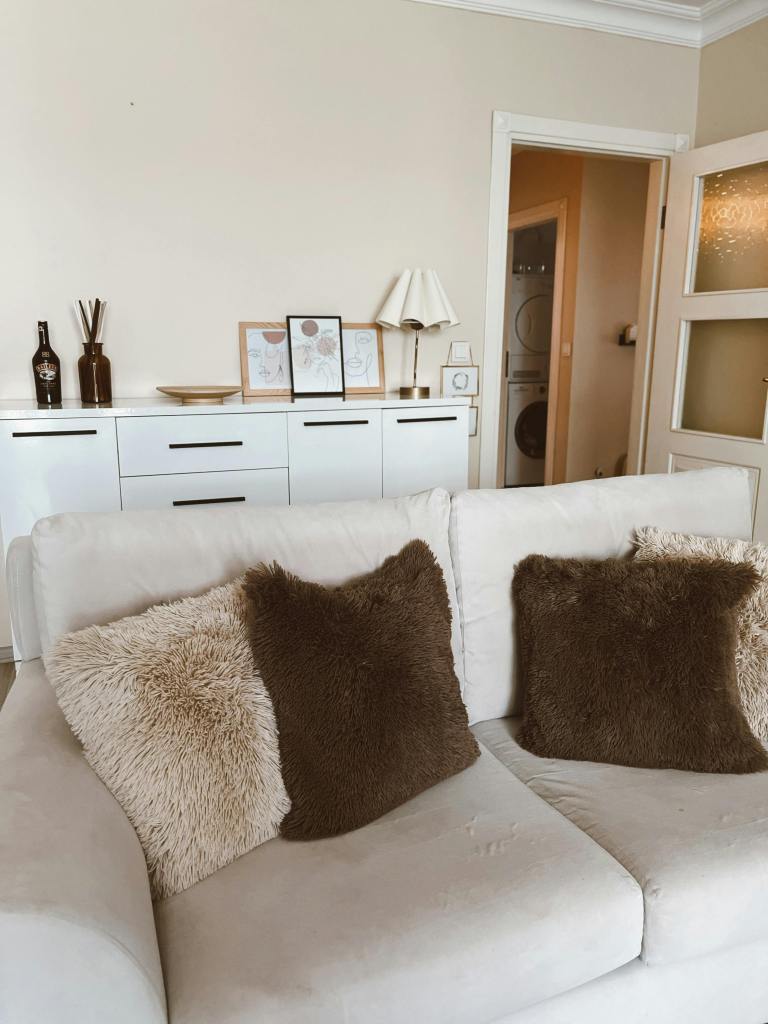
A lot of small apartments look styled, but still don’t feel put together, this is where things can feel confusing. You might have decor, cohesive colors, and intentional furniture choices, but the space still doesn’t feel finished. That’s because styling and cohesion are not the same thing.
Styling is about what you add and your space being put together is about how everything relates. A styled space can still feel disconnected if each area operates independently. You can have a well-decorated coffee table, a thoughtfully arranged shelf, and a clean kitchen, but if they don’t connect visually, the apartment still feels incomplete.
A “put together” space feels unified. Everything looks like it belongs in the same environment. Materials echo each other, shapes feel intentional, and nothing feels like it was added randomly or without context.
This is especially important in small apartments because there are no clear visual breaks between spaces. Everything is visible at once, which means every section contributes to the whole. When styling shifts into cohesion, the space stops feeling like separate areas and starts feeling like a complete environment.
Why Edges and Corners Define the Entire Space

Most people focus on the center of a room since that’s where furniture goes, and that’s where attention naturally lands. But in a small apartment, the edges of the space matter just as much, sometimes more.
Edges and corners define how the space is contained. When they’re ignored, the apartment can feel unfinished even if the main areas are well designed. Empty corners, inconsistent transitions, or awkward spacing at the edges can make the entire room feel incomplete.
When edges are intentional, the space feels framed. This doesn’t mean filling every corner. It means making sure each boundary of the space feels resolved. That could be through a vertical element, a soft transition, or a subtle continuation of materials.
Even something minimal, like the Greenco Floating Corner Shelves, can help define a corner without adding bulk. It gives the space structure without overwhelming it.

When edges feel complete, the room feels contained, and when the room feels contained, the entire apartment feels more finished.
The “Too Many Small Things” Problem

One of the fastest ways a small apartment starts to feel cluttered, even when it’s organized, is through too many small items. Individually, these items don’t seem like a problem.
A candle, a small plant, a decorative object, a stack of books. Each one feels intentional. But when too many of them exist without structure, they create visual noise.
This is where the space starts to feel busy. The issue isn’t the number of items, it’s the lack of grouping. When small items are scattered, your eye has to process each one individually. This creates a sense of overwhelm, even if the space is technically clean.
Grouping changes that. When items are arranged together, they read as a single unit instead of multiple separate elements. This reduces visual noise without requiring you to remove anything.
A piece like the Hanobe Decorative Wood Tray works well for this because it creates a defined boundary. Instead of multiple small objects competing for attention, they become one cohesive arrangement.
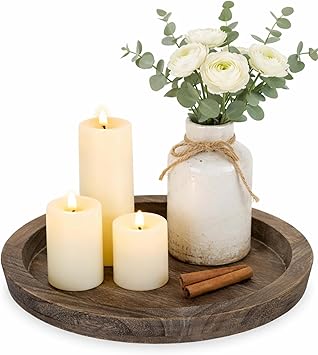
This small shift makes a noticeable difference. The space feels calmer, more intentional, and significantly more put together.
How Alignment Creates Instant Order
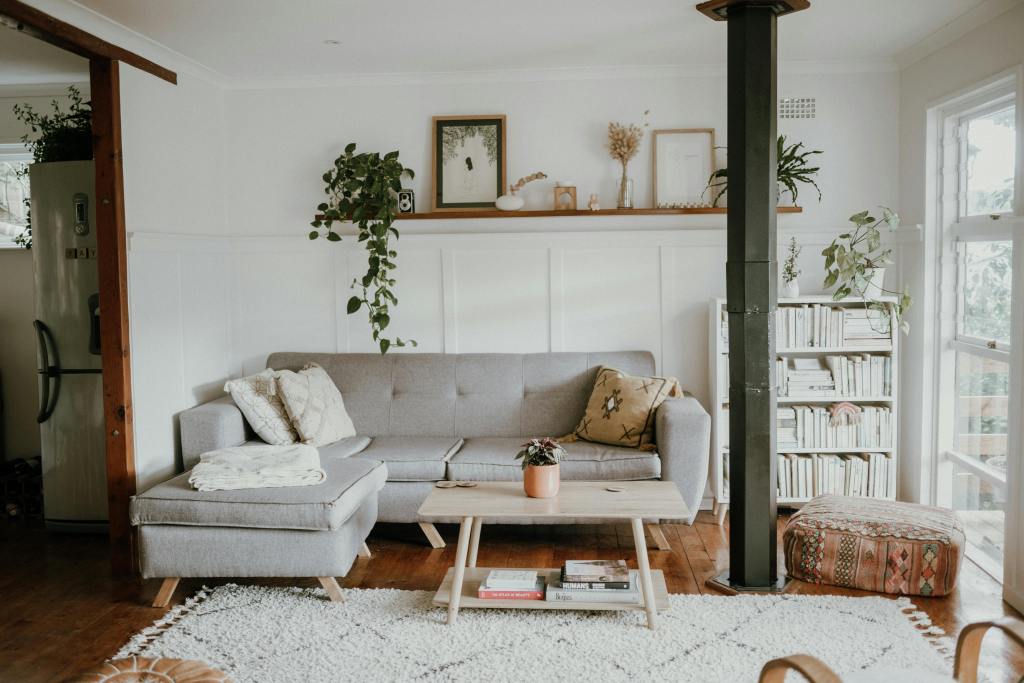
Alignment is one of the simplest ways to make a space feel more intentional, but it’s often overlooked. When items are slightly off, shifted just a bit out of line, spaced unevenly, or placed without relation to each other, the space feels unsettled.
You may not notice it immediately, but it creates a subtle sense that something isn’t quite right. Alignment removes that tension. When objects share the same visual line, whether horizontally or vertically, they create order without needing additional structure. Shelves feel cleaner, surfaces feel more intentional, and furniture feels properly placed.
This is especially important in small apartments because small inconsistencies are more noticeable. Even simple adjustments, lining up decor, centering items, or maintaining consistent spacing, can change how the entire room feels.
Alignment doesn’t add anything to the space, it simply organizes what’s already there, and that’s often what makes the difference between a space that feels fine and one that feels finished.
The Role of Material Consistency in Small Apartments
Material inconsistency is one of the most subtle reasons a space can feel unfinished. When too many unrelated materials exist in one space, they compete instead of connect. Even if everything is functional, the lack of cohesion makes the apartment feel slightly chaotic.
This is especially noticeable in small apartments where everything is seen together. Material consistency doesn’t mean everything has to match. It means there’s a relationship between the materials being used.
For example, if one area introduces a warm wood tone, repeating that tone elsewhere, even in a small way, creates continuity. The same applies to metals, fabrics, and finishes. A piece like the VASAGLE Industrial Wall Shelf works well because it combines materials that can be echoed throughout the space. It becomes part of a larger visual system instead of a standalone item.
When materials relate to each other, the space feels unified, and when the space feels unified, everything feels more put together.
Shop This Post: Essentials That Make Your Space Feel Put Together
This site contains affiliate links. I may earn a small commission, at no extra cost to you. Please view the disclosure for more information

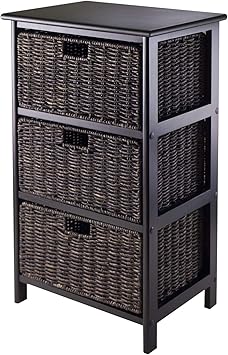


Creating a space that feels put together isn’t about adding more. It’s about choosing pieces that quietly connect everything around them.
For areas that feel undefined, especially corners and edges, something like Greenco Floating Corner Shelves adds subtle structure without adding bulk. It helps complete the boundaries of a room so the space feels contained instead of unfinished.
And for maintaining clean alignment and structure in everyday storage, the SimpleHouseware Stackable Water Bottle Organizer Bottle Organizer keeps items visually organized so they don’t disrupt the overall flow of the room.
Each of these works because it supports how your space is perceived, not just how it functions. Instead of adding more, they create connection—and that’s what makes a small apartment feel finished.
Conclusion
A small apartment feels put together when nothing feels accidental. Not because there’s more in the space, but because everything within it works together.
When visual hierarchy is clear, your eye knows where to settle. When repetition exists, separate areas feel connected. When proportion is balanced, the space feels stable. And when layering is present, the space gains depth without becoming cluttered.
These elements don’t work independently, they reinforce each other. This is what transforms a space from something that simply functions into something that feels complete.
When your apartment reaches this point, it no longer feels like something you need to constantly adjust. It holds its structure naturally. It feels intentional without requiring ongoing effort.
That’s what makes a space feel effortless.
If you want to continue refining your apartment beyond this stage, the next step is combining these visual principles with functional systems:
- Small Apartment Storage Solutions That Actually Fix Daily Clutter
- Small Apartment Organization Systems That Keep Your Home Effortlessly Clean
- Studio Apartment Hacks – How to Make a Small Open Space Work for You
When these layers come together, your apartment doesn’t just look organized. It feels complete, consistent, and easy to live in every day.
Leave a Reply