
This site contains affiliate links. I may earn a small commission, at no extra cost to you. Please view the disclosure for more information
Keeping a small apartment clean is often treated like a matter of discipline. The assumption is that if you stay consistent, clean regularly, and build better habits, your space will stay under control. But in practice, that’s not what happens.
Most people don’t struggle with knowing how to clean. They struggle with maintaining a space that doesn’t constantly need to be reset.
That’s because the issue isn’t effort, tt’s structure. When a space isn’t designed to support how you actually live, even good habits start to fail. Items get left out not because you’re careless, but because there isn’t a clear or convenient place for them. Surfaces collect clutter because they’re the easiest option in the moment. Small inefficiencies compound until the space feels harder to manage than it should.
This is where most organization advice falls short. It focuses on organizing once, instead of creating systems that maintain themselves over time.
In a small apartment, that distinction matters more because there is less space to absorb inconsistency. There’s less room for overflow, and there’s less separation between areas, which means even small disruptions affect the entire environment. That’s why the goal isn’t to clean more often. It’s to build organization systems that make cleanliness the default state of your home.
When your space is structured correctly, things don’t drift out of place the same way. Items return to where they belong without effort. Surfaces stay clear because they’re not designed to hold excess. And your daily routines reinforce order instead of working against it.
If you’ve already begun structuring your apartment through posts like “Where to Put Everything in a Small Apartment (Room-by-Room Guide)”, this is the next layer.
This is where organization becomes automatic.
If you’re starting to build systems that keep your apartment clean as you read, a few small changes can make an immediate difference. The right pieces don’t add more—they remove friction from your daily routine.
This site contains affiliate links. I may earn a small commission, at no extra cost to you. Please view the disclosure for more information
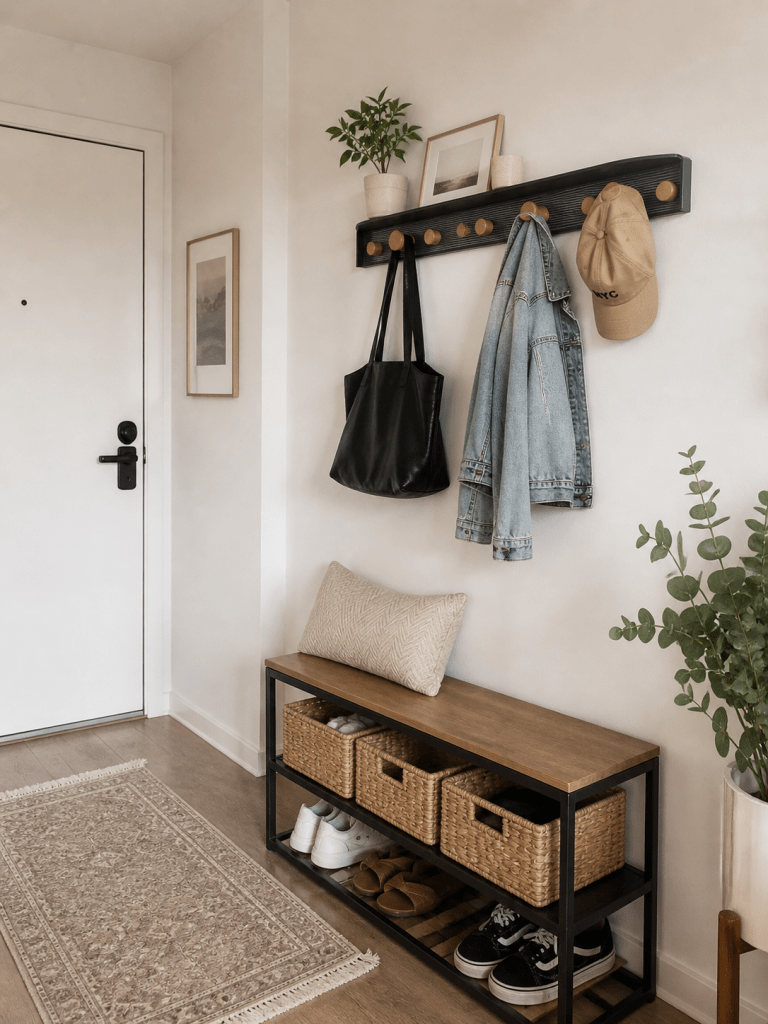
A simple upgrade like the TATUB Wall-Mounted Coat Rack Shelf creates a clear place for everyday items the moment you walk in, which prevents clutter from spreading beyond your entry.
For areas that need flexible structure, something like the Winsome Wood Leo Storage Shelf with Baskets helps contain daily items without making your space feel crowded or overly structured.
If your surfaces tend to collect clutter, a system like the Yamazaki Home Slim Rolling Storage Cart keeps essentials nearby while maintaining clean, open space where you actually use it.
And for smaller items that tend to get moved multiple times throughout the day, the Joseph Joseph DrawerStore Expandable Organizer simplifies where things go so they’re put away without thinking.
Why Clean Spaces Feel Effortless (And Messy Spaces Don’t)
There’s a noticeable difference between a space that feels easy to maintain and one that constantly needs attention. It’s not about how often it’s cleaned. It’s about how it behaves between cleanings.
In a well-structured apartment, actions flow naturally. You come home, place your belongings, move through your routine, and leave without disrupting the space. Nothing feels forced. Nothing requires extra steps. The system supports you quietly in the background.
In a poorly structured space, even simple actions create resistance. You walk in and hesitate before putting something down because there’s no clear place for it. You use an item and delay putting it away because it’s inconvenient to access its storage. You set things down “temporarily,” but those temporary placements become permanent patterns.
This is how clutter builds, not from neglect, but from friction. Every time a system requires an extra step, a decision, or a moment of effort, it increases the chance that the task won’t be completed. And in a small apartment, those incomplete actions are immediately visible. Over time, that creates a cycle. The space gets slightly cluttered, that clutter makes it harder to use the space efficiently, because it’s harder to use, more items get left out. And the system breaks down further.
Effortless spaces break that cycle. They remove unnecessary decisions, reduce the number of steps required to maintain order and they make the correct action the easiest one to take.
That’s what creates the feeling of ease. It’s not that the space stays perfect, it’s that it stays stable.
Designing Systems That Work Without Reminder
Most organization systems rely on memory. They assume you’ll remember where things go, remember to put them back, and remember to maintain the system over time. But memory isn’t reliable enough to support consistency because attention shifts, routines change and life gets busy.
When a system depends on remembering, it eventually fails. The most effective systems remove that dependency entirely. Instead of relying on awareness, they rely on placement. When something is positioned exactly where it’s needed, you don’t have to think about it. The action becomes automatic because the environment supports it. This is where subtle design decisions make a major difference.
For example, if you always set your bag down on the nearest chair when you walk in, that behavior isn’t random. It’s based on convenience and proximity. Trying to force yourself to change that habit rarely works long-term.

The habit stays the same, the result changes, and that’s what makes a system sustainable. It doesn’t rely on discipline, it relies on alignment.
Creating Zones That Absorb Daily Life

In a small apartment, space isn’t divided in the same way it is in larger homes. Rooms overlap in function, a living area may double as a workspace, a bedroom may serve as storage and entryways are often minimal or nonexistent. Because of this, organization systems need to handle multiple roles at once. Instead of trying to separate everything, it’s more effective to create zones that absorb activity.
These zones act as buffers between daily life and the rest of your space. They’re designed to take in movement, hold items temporarily, and prevent them from spreading outward. Without them, items drift across the apartment and create clutter in areas that aren’t designed to handle it.
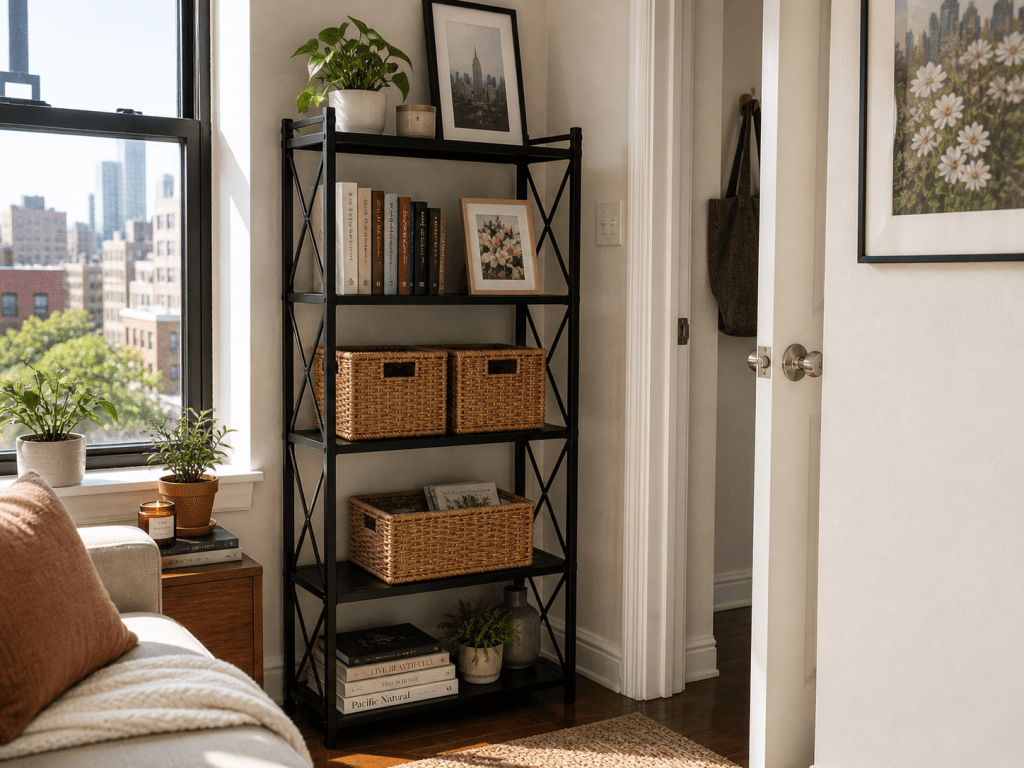
The key is making these zones intentional. A piece like the Winsome Wood Leo Storage Shelf with Baskets works because it creates both open and contained storage in one area. Items can be placed quickly without losing structure.
This allows the zone to function naturally. Instead of resisting clutter, it manages it. And because it’s designed to handle daily use, it prevents clutter from expanding into the rest of the apartment.
Reducing the Need to “Put Things Away”
One of the biggest sources of friction in organization systems is the expectation that everything needs to be put away perfectly, and that expectation creates resistance.
If putting something away requires multiple steps, rearranging other items, or accessing storage that’s not immediately available, it gets delayed, and delayed actions are where clutter begins.
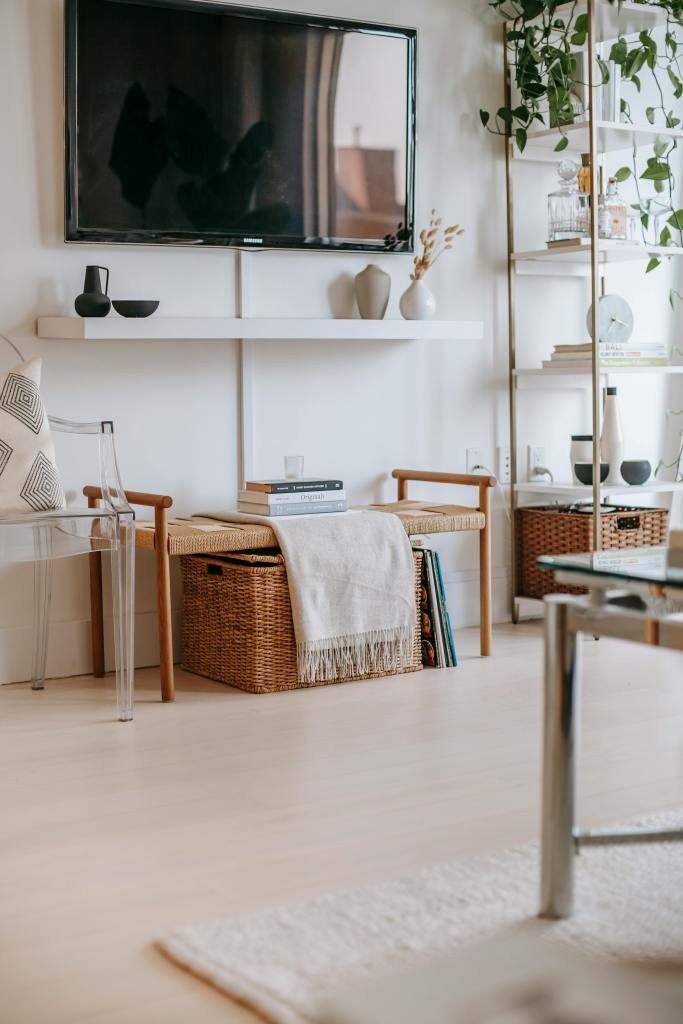
The solution isn’t to improve discipline. It’s to redefine what “putting something away” actually means. Instead of requiring items to be stored out of sight every time, effective systems allow for controlled visibility.
Items have designated resting places that don’t disrupt the overall space. This reduces the effort required to maintain order. For example, a system like the Joseph Joseph DrawerStore Expandable Organizer simplifies how items are returned to storage. There’s no need to arrange or adjust. Everything fits into place quickly.

That simplicity matters, when putting something away feels as easy as setting it down, it becomes automatic.
The Role of Movement in Organization
Most organization advice focuses on static placement such as where things go, how they’re stored and what systems look like when they’re complete. But real organization happens in motion. It’s shaped by how you move through your space, not just where things sit.
In a small apartment, movement patterns are more concentrated. You follow the same paths repeatedly. You interact with the same areas multiple times a day.
These patterns determine where systems need to exist. If a system interrupts your natural movement, it creates friction. If it aligns with your movement, it disappears into your routine.
This is why observation is so important. Where do you pause when you walk in? Where do you tend to set things down? Where do you hesitate when putting something away?
These points reveal where your systems should be built. A flexible solution like Foldable Storage Rack works because it can adapt to those patterns. It doesn’t force a fixed layout. It allows your system to evolve as your routine changes.

This adaptability is what keeps systems relevant over time.
Making Clean Surfaces the Default

Surfaces define how a space feels and when they’re clear, the apartment feels open and manageable. When they’re cluttered, the entire environment feels chaotic.
The goal isn’t to constantly clear surfaces. It’s to design them so they stay clear naturally. This happens when surfaces are no longer used as primary storage. Instead, storage is shifted slightly off the surface into contained systems that maintain accessibility without spreading.

This small shift has a large impact. When surfaces are protected, the entire apartment feels more organized, even if other areas are in use.
Systems That Continue Working Over Time
The final measure of any organization system is longevity. Most systems work initially, they look organized, feel functional, and create a sense of control. But over time, they require more effort to maintain.
That’s where they fail. Sustainable systems are designed to handle inconsistency. They allow for small deviations without breaking, they continue functioning even when routines shift slightly, and they don’t require constant resetting.
This is what makes them long-term solutions. Instead of organizing repeatedly, you maintain a system that holds its structure over time.
The Role of “Friction Points” in Daily Mess
One of the most overlooked causes of clutter in a small apartment is friction. Not major friction, but small, almost invisible resistance in everyday actions. If opening a drawer requires moving something else, you hesitate.
If putting something away takes an extra step, you delay it. If storage feels slightly inconvenient, you avoid it.
Individually, these moments don’t seem important. But repeated throughout the day, they define how your space functions. Clutter forms exactly where friction exists.
That’s why two apartments with the same layout can feel completely different. One feels effortless, while the other constantly needs to be reset.
The difference isn’t effort, it’s how much resistance exists in the system. Adjusting small interactions, instead of major changes, will help reduce friction. A drawer that opens easily gets used, a storage space that’s within reach gets maintained, and a system that feels intuitive becomes automatic.
This is what allows organization to hold without constant attention.
Why “Out of Sight” Doesn’t Always Work
Hidden storage is often recommended as the solution to clutter, but in small apartments, it can create new problems. When items are completely out of sight, they’re also out of mind. Storage becomes a place where things are placed once and rarely used again. Instead of supporting daily life, it disconnects from it.
This is why some hidden systems feel ineffective over time. The issue isn’t visibility, it’s accessibility.
Storage needs to strike a balance between being contained and being usable. When items are too hidden, they become difficult to maintain, and when they’re too visible, they create visual clutter.
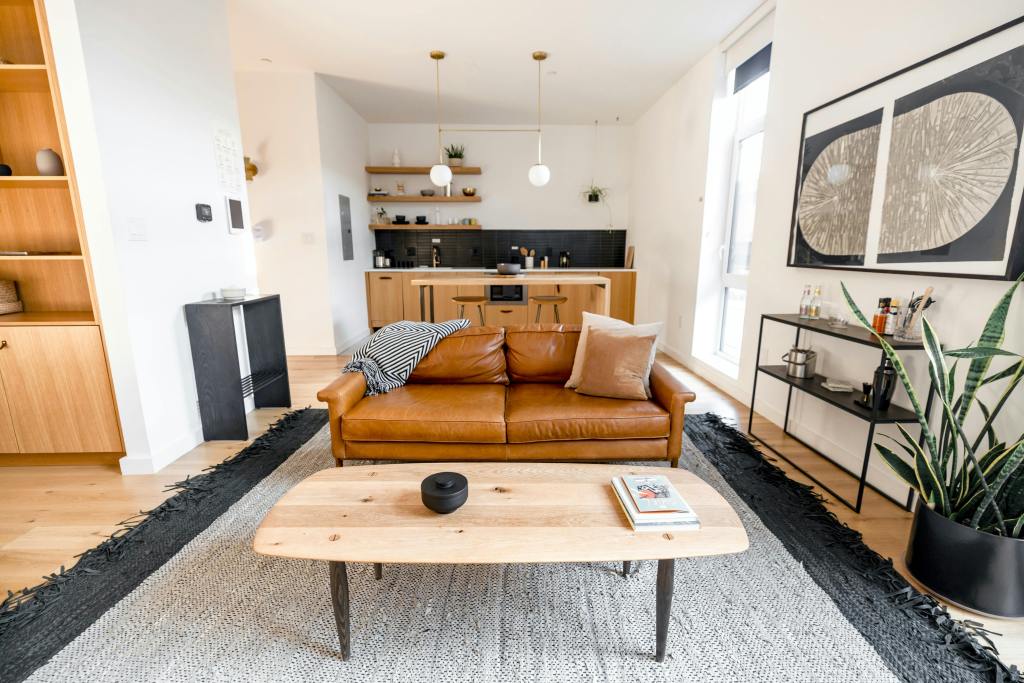
The most effective systems sit in between. They keep items controlled without removing them from your routine. They allow you to see enough to stay organized, but not so much that the space feels crowded.
This balance is what keeps a system functional long-term.
How Visual Weight Affects Perceived Clutter
Clutter isn’t just about quantity. It’s about how heavy a space feels visually. Two apartments can have the same number of items, but one feels calm while the other feels overwhelming.
That difference comes from visual weight. Dark, bulky, or dense storage makes a space feel more crowded. Even when it’s organized, it can feel overwhelming because of how it occupies the room.
Lighter, more open systems reduce that weight. They allow the eye to move through the space, which creates the feeling of openness even when storage is present. This is why certain organization systems feel easier to maintain.
They don’t just organize items, they change how the space is perceived, and when your apartment feels lighter, it naturally feels cleaner.
The “Return Path” Most Systems Ignore
Most organization systems focus on where items go, but very few consider how those items actually return to that space.
This is where most systems begin to break down. Taking something out is easy because it fits naturally into your routine. But returning it is a separate action, and that’s where friction appears. If putting something back requires even a small amount of extra effort, moving something else, opening multiple compartments, or pausing to decide where it belongs, that step gets delayed.
At first, it doesn’t seem significant. An item is left out for a few minutes, then for a few hours. Eventually, it becomes part of the space instead of something temporary. When this happens repeatedly, clutter forms not because of neglect, but because the system makes returning items just difficult enough to avoid.
Over time, those small delays compound. A functional organization system removes that gap entirely. It makes the return process feel just as natural as the initial use. Items don’t need to be adjusted, shifted, or reconsidered before being put away. They simply move back into place without interruption.
When returning something feels immediate, it happens automatically, and that consistency is what keeps a system working over time.
Why Cleaning Feels Harder Than It Should
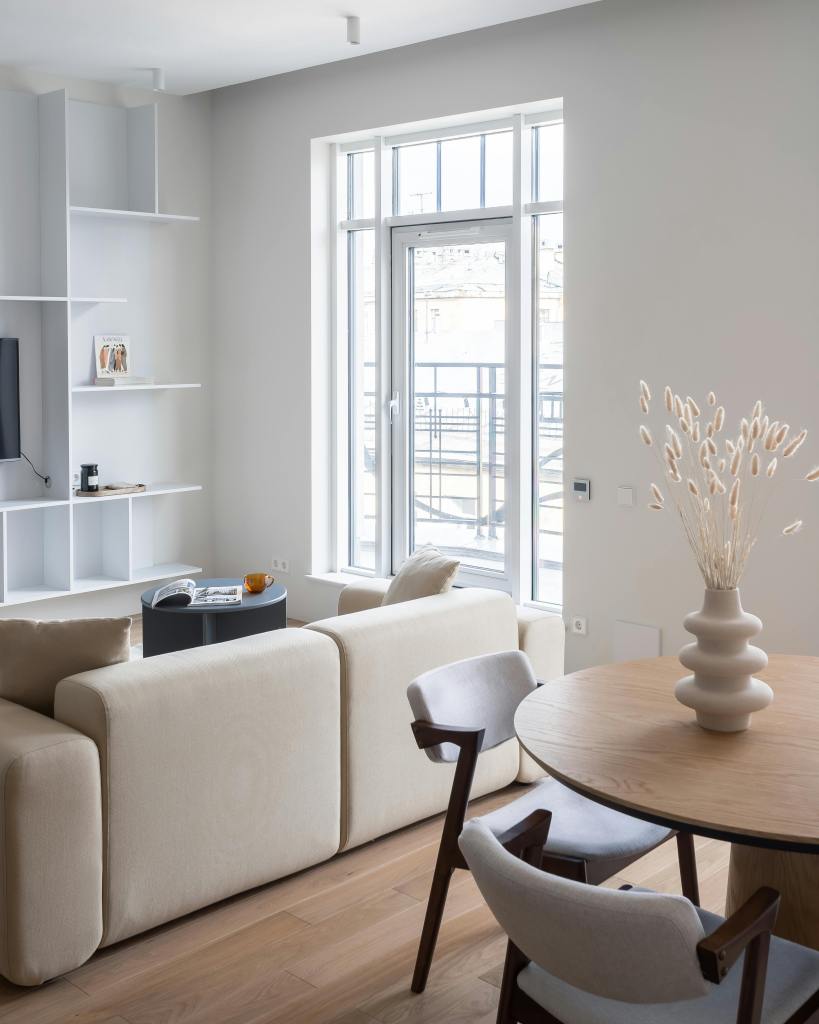
When organization systems aren’t working, cleaning becomes more difficult than it needs to be. Not because there’s more to clean, but because there’s more to manage.
Instead of wiping a surface, you have to move items first. Instead of resetting a space, you have to decide where things go. This turns simple tasks into multi-step processes.
Over time, that added effort makes cleaning feel overwhelming. When systems are working correctly, cleaning becomes lighter. Surfaces stay clear, items are already contained, and there’s less to move, less to decide, and less to reset.
This is what makes a space feel easy to maintain.
Shop This Post: Systems That Keep Your Apartment Effortlessly Clean
This site contains affiliate links. I may earn a small commission, at no extra cost to you. Please view the disclosure for more information
| Product Image | Product Name / Price | Primary Button |
|---|---|---|
|
Vertical Storage
|
||
|
Kitchen Storage
|
||
|
Vertical Storage
|
||
|
Hidden Storage
|
||
|
Drop Zone
|
||
|
Vertical Storage
|
||
|
Drop Zone
|


If your goal is to create a space that maintains itself, the focus should be on systems that reduce effort and support movement.
- A solution like the TATUB Wall-Mounted Coat Rack Shelf helps establish an immediate drop zone that prevents items from spreading beyond the entry point.
- For building adaptable zones, the Winsome Wood Leo Storage Shelf with Baskets creates structure that can handle daily use without becoming rigid.
- To simplify how items return to storage, the Joseph Joseph DrawerStore Expandable Organizer removes unnecessary steps.
- For systems that adjust with your routine, the Foldable Storage Rack allows flexibility without disruption.
- And to maintain clean surfaces, the Yamazaki Home Slim Rolling Storage Cart keeps items accessible without creating clutter.
Conclusion
An effortlessly clean apartment isn’t created through constant effort. It’s created through systems that remove the need for effort in the first place.
When your space is designed around how you actually live, organization becomes something that happens naturally. Items return to where they belong without thought. Surfaces stay clear because they aren’t used as overflow. And daily routines reinforce the structure instead of working against it.
This is what makes small apartments feel manageable instead of overwhelming. The difference isn’t how much you do. It’s how much your space does for you. When systems reduce friction, support movement, and adapt over time, they stop requiring attention. They hold their structure even when your routine isn’t perfect.
That’s when your apartment stops feeling like something you need to constantly fix. It becomes something that supports you automatically.
To continue building a space that stays organized without effort, connect this with:
- Small Apartment Storage Solutions That Actually Fix Daily Clutter
- Where to Put Everything in a Small Apartment (Room-by-Room Guide)
- Small Apartment Cleaning Routine That Keeps Your Space Clutter-Free in 15 Minutes a Day
Because when these systems work together, your apartment doesn’t just stay clean.
It stays easy.
Leave a Reply