This site contains affiliate links. I may earn a small commission, at no extra cost to you. Please view the disclosure for more information.
Closet space is one of the biggest challenges in a small apartment. Whether you’re working with a narrow reach-in closet, a shared wardrobe, or a space that barely qualifies as a closet at all, it can quickly become the most cluttered area in your home.
The problem isn’t just lack of space, it’s that most closets aren’t designed for real life. They assume fewer clothes, less variety, and far more structure than most people actually use day to day.
That’s why traditional organizing advice often fails in small apartments.
This guide takes a different approach.
Instead of trying to force more into the same space, the goal is to redesign your closet so it works with your lifestyle. When your closet functions as a system instead of a storage dump, clutter naturally decreases, and the space becomes easier to maintain.
By the end, your closet won’t just look more organized. It will feel easier to use, easier to reset, and significantly more spacious.
If you’re setting up your closet as you read, these are the simple pieces that make the biggest difference without taking up extra space.
This site contains affiliate links. I may earn a small commission, at no extra cost to you. Please view the disclosure for more information.
Slim, uniform hangers like Amazon Basics Slim Velvet Hangers help reduce bulk and make everything easier to see at a glance.
If your closet only has one rod, adding a second level with the ClosetMaid Adjustable Hanging Rod instantly doubles your hanging space without making the closet feel crowded.
For items that tend to pile up, structured storage like the Stackable Closet Drawer Organizer creates clear, contained space instead of clutter.
And for anything you don’t need every day, Onlyeasy Under Bed Storage Bags help keep your closet focused on what you actually use.
Rethinking Closet Space in Small Apartments
Before you organize anything, you need to redefine what your closet is actually for. In a small apartment, your closet should function as a daily-use system rather than long-term storage. When everything is stored in one place, it creates visual clutter, decision fatigue, and constant disorder.
A more effective approach is to treat your closet as a curated space. It should hold only what you use regularly, while everything else is rotated or stored elsewhere.
This is the same principle used in “Where to Put Everything in a Small Apartment (Room-by-Room Guide)”, where each area of your home is given a clear role instead of trying to do everything at once.
When your closet is defined by purpose instead of capacity, it immediately becomes easier to manage.
Designing a Functional Closet Layout
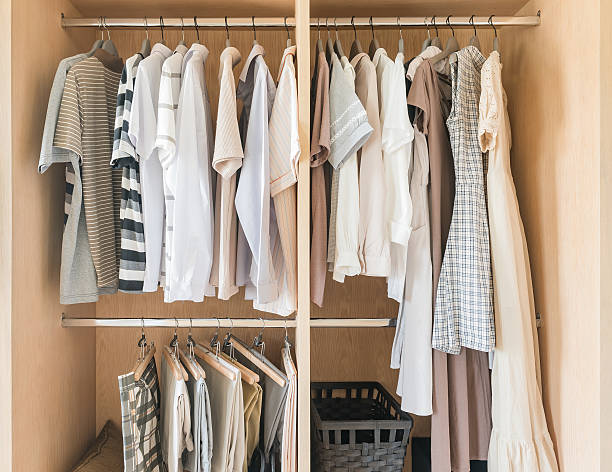
Most closets fail because they rely on a single rod and one shelf, which leaves large portions of the space underused. A functional closet works in layers, where each section has a clear purpose.
The upper section becomes structured storage for items you don’t need every day. Instead of loose piles, using contained storage like StorageWorks Closet Storage Bins keeps everything visually clean while still accessible.
The middle section becomes your daily-use zone, where frequently worn clothing stays visible and easy to reach. This is where your system should feel effortless.
The lower section should never be wasted. Instead of leaving it empty or cluttered, adding structure with something like this Stackable Closet Drawer Organizer transforms it into usable storage without adding visual heaviness.

This layered structure ensures every part of your closet has a role, which is what prevents clutter from returning.
Making Hanging Space Work Smarter
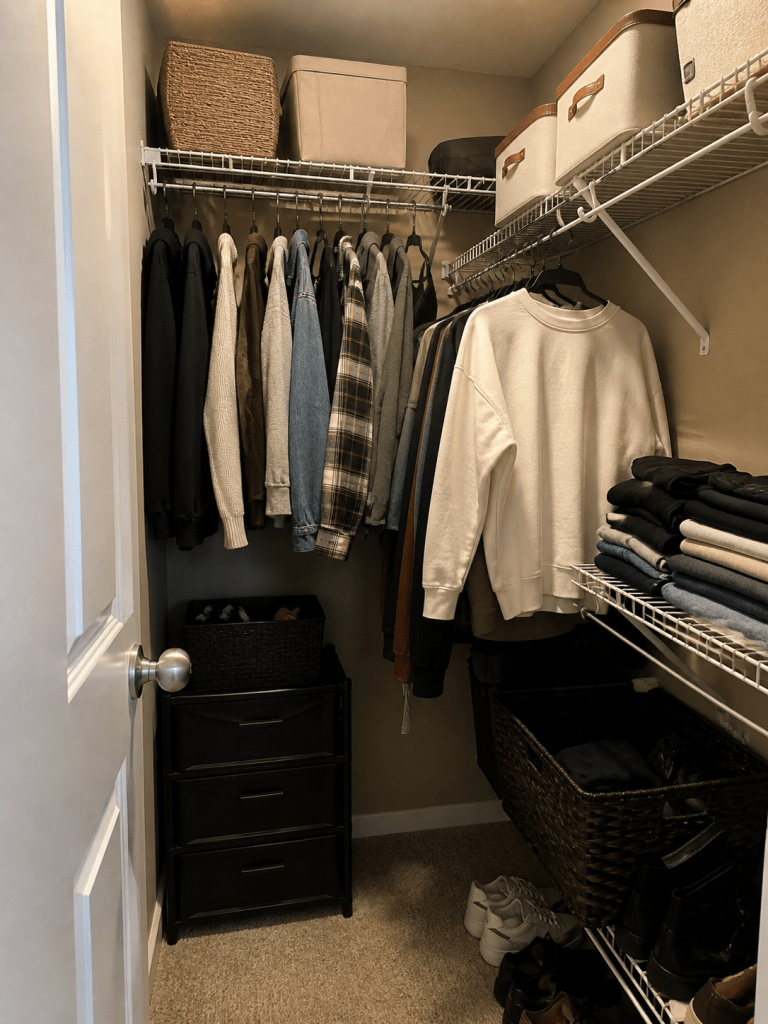
Hanging space is often the most overlooked opportunity in a small closet. Most setups rely on a single rod, which immediately limits capacity. By adding a second adjustable rod, you create two layers of hanging space for shorter garments, effectively doubling what your closet can hold without making it feel cramped.
A system like ClosetMaid Adjustable Hanging Rod allows you to customize your closet based on what you actually wear. Pairing this with slim, uniform hangers such as Amazon Basics Slim Velvet Hangers reduces bulk and keeps clothing aligned, making everything easier to see.


Turning Dead Space Into Functional Storage
Most closets don’t lack space, they lack structure. Dead space tends to collect above the hanging rod, below clothing, inside corners, and behind doors. When these areas are used intentionally, the closet starts to feel significantly larger.
The space above your hanging rod works best when it’s contained. Instead of stacking items loosely, using matching bins like mDesign Fabric Closet Storage Bins keeps everything organized and easy to find.

Below hanging clothes, structured storage creates order where clutter usually builds. Stackable systems or low-profile drawers allow you to use that space without overwhelming it.
Closet doors are another missed opportunity. A vertical solution like MISSLO Over The Door Hanging Organizer creates storage without taking up any interior space, which is especially useful in smaller layouts. Corners should be assigned a purpose rather than left undefined. When every area has a role, nothing gets lost or forgotten.
Use the Space Above Your Hanging Rod
This area is one of the most commonly wasted parts of a closet. It often turns into a place where things are stacked quickly and forgotten just as fast. Over time, it becomes less of a storage solution and more of a clutter zone.
When this space is structured intentionally, it becomes one of the most efficient storage areas in your entire closet.
Instead of loose piles, creating contained storage immediately changes how this section functions. Using uniform containers like StorageWorks Closet Storage Bins allows you to group items by category while keeping everything visually clean. This prevents the “overflow effect” where items slowly spread and lose structure.
This area works best for items you don’t need daily. Seasonal clothing, extra linens, and backup items can all live here without interfering with your everyday routine. The key is making sure everything is contained and easy to identify.
Labeling plays a bigger role than most people expect. Even if you think you’ll remember what’s inside, you won’t over time. Labels remove friction and make it easier to maintain the system long-term.
When this space is organized properly, it shifts from being a forgotten zone to a reliable extension of your closet.

Maximize the Space Below Hanging Clothes
The bottom of your closet is often left empty or becomes a catch-all for random items. This is one of the biggest missed opportunities in small apartment storage.
When you add structure here, it transforms into one of the most functional areas in your closet.
Instead of leaving this space undefined, using a system like this 3-tier storage solution creates clear, contained storage for folded clothing, accessories, or overflow items. This allows you to use vertical space without stacking things in a way that feels messy or unstable.

For shoes, keeping them contained instead of scattered makes a noticeable difference. A low-profile solution like Whitmor Stackable Shoe Rack keeps everything accessible while maintaining a clean visual line across the bottom of the closet.
Consistency matters, when containers match in size and style, the entire space feels more organized, even if it’s fully utilized.
This section should feel structured, not crowded. When done correctly, it removes clutter from the rest of your apartment by giving everything a defined place.

Fill Vertical Gaps (Don’t Leave Air Space)
One of the biggest inefficiencies in closet organization isn’t lack of width, it’s unused height. Small gaps between shelves, bins, or stacked items may not seem like much, but over time they add up to a significant amount of wasted space. You can expand your storage, without adding bulk, by filling these gaps intentionally.
Adding subtle structure, such as shelf risers or compact organizers, helps you take advantage of every inch without making the space feel heavy. This creates separation between categories, which not only increases capacity but also makes everything easier to find.
The key here is balance. You want to use vertical space efficiently, but not to the point where the closet feels compressed. When items are layered with intention, the space feels organized rather than overfilled.
Use the Inside of Closet Doors
The inside of your closet door is one of the most overlooked storage opportunities, yet it offers some of the easiest additional space to work with. Because it doesn’t interfere with your main closet layout, it allows you to add storage without sacrificing room elsewhere.
This area works best for smaller, frequently used items that tend to get lost or misplaced. Accessories, scarves, lightweight bags, and even cleaning supplies can all be stored here in a way that keeps them visible and easy to access.
Hook systems can also be effective here, especially for items you reach for daily. Keeping these items off shelves and rods prevents overcrowding and makes your closet feel more open.
When used intentionally, this space acts as a support system for your closet, holding the items that would otherwise create clutter elsewhere.
Turn Corners Into Usable Storage
Closet corners often become areas where items are placed and forgotten. Because they’re harder to access, they tend to collect clutter rather than function as intentional storage.
The key to making corners useful is giving them a clear purpose. When items are grouped and contained, corners become predictable instead of chaotic.
Instead of treating corners as overflow zones, assigning them specific roles keeps everything within reach. Bags, seasonal items, or backup storage can all live here, as long as they’re grouped intentionally.
This prevents the “black hole” effect where items disappear and contribute to hidden clutter.
Add a Second Hanging Level (Game Changer)
If your closet has only one hanging rod, you’re using only a portion of the space available. Most clothing items, especially shirts and shorter garments, don’t require full vertical height. This creates an opportunity to double your hanging capacity without making the closet feel crowded.
This is especially effective for organizing clothing by type. Shorter items can be grouped together, while longer pieces remain on a single rod where needed.
The result is a closet that holds significantly more while still feeling structured and easy to navigate.
This is one of the simplest changes you can make, but it has one of the biggest impacts on overall functionality.
Keep It Visually Light (Important for Small Spaces)
There’s a difference between maximizing space and overfilling it. When every inch is packed tightly, the closet starts to feel smaller, even if it’s technically more efficient.
Creating visual breathing room is what keeps the space feeling open. Using lighter tones, consistent materials, and slim storage solutions helps maintain that balance. Bulky containers or overly dense layouts can quickly undo the progress you’ve made.
Spacing also matters. Leaving small gaps between items prevents the closet from feeling compressed and makes it easier to maintain over time.
A closet that looks calm is easier to keep organized. When the system feels manageable, it naturally stays that way.
KEY TAKEAWAY
Dead space isn’t wasted space, it’s hidden storage potential. When your closet is structured intentionally, every section begins to serve a purpose instead of becoming a place where clutter builds up.
By using vertical space effectively, creating defined zones, and adding simple storage systems that support your daily routine, even the smallest closet can feel significantly larger and easier to maintain.
This is where your closet stops being a limitation and starts functioning as one of the most efficient systems in your apartment.
Simplifying Your Closet Visually
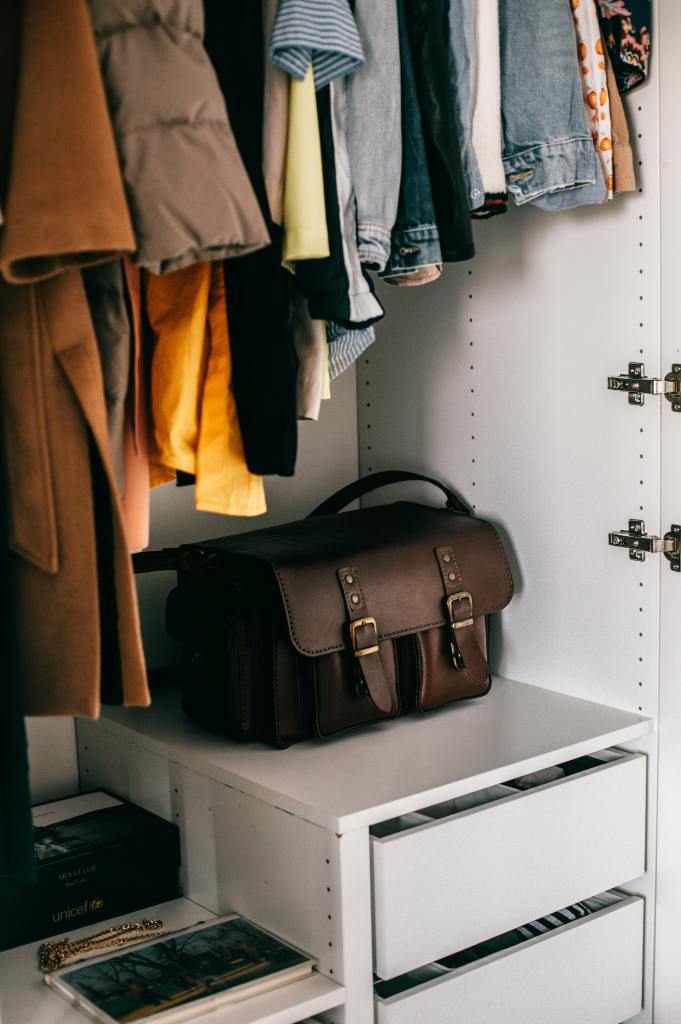
Clutter isn’t always about how much you have. It’s often about how inconsistent everything looks. When hangers, bins, and storage styles don’t match, the closet feels chaotic even if it’s technically organized.
Creating consistency instantly changes how the space feels. Matching bins, uniform hangers, and neutral tones create visual calm and make the closet feel more open.
This mirrors “Minimalist Small Living Room Ideas for a Calm Space”, where visual simplicity directly impacts how spacious a room feels.

Using Rotation to Prevent Overflow
One of the most effective strategies for small closets is rotation. Instead of keeping everything in one space year-round, moving off-season clothing elsewhere reduces overcrowding immediately.
Under-bed storage is one of the easiest ways to do this without losing accessibility. A structured option like Onlyeasy Under Bed Storage Bags keeps items protected and out of sight.
For closets that still feel tight, adding vertical storage inside the closet helps extend your space. A hanging system like Simple Houseware 6-Shelf Hanging Closet Organizer creates additional storage without requiring any permanent changes.
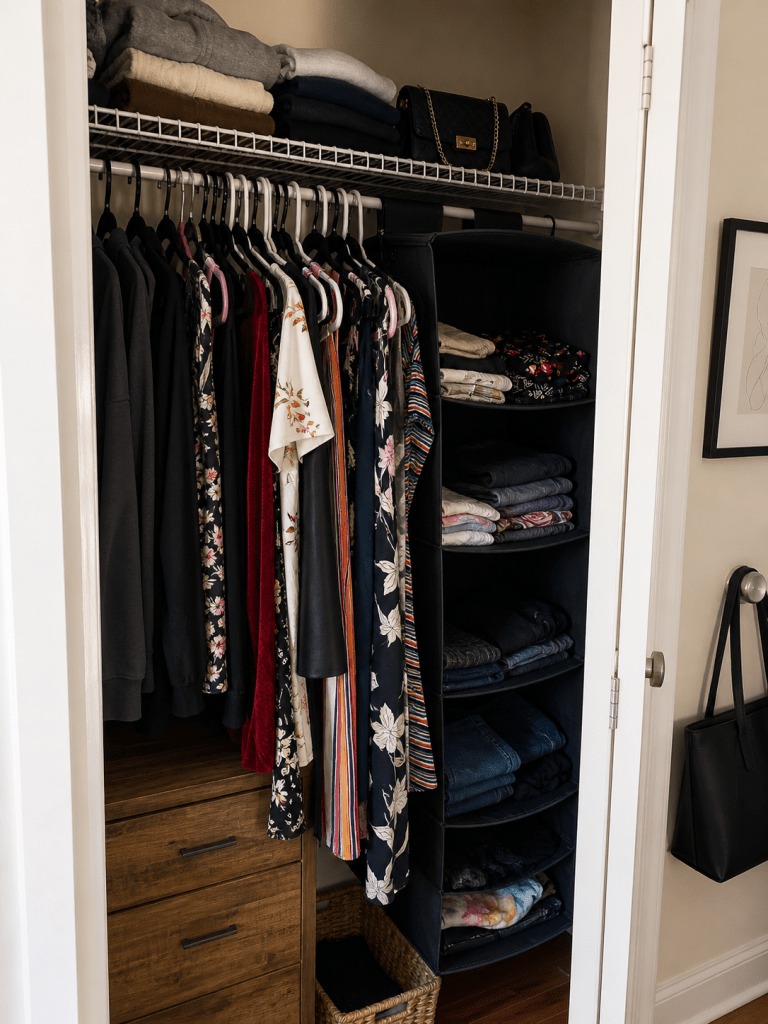
Advanced Small Closet Hacks (Niche Ideas)
Closet organization becomes easier when your system reflects how you actually use your clothing.
Dividing your closet into micro-sections based on lifestyle rather than category allows everything to stay organized without constant effort. Instead of grouping items generically, organizing by how you wear them reduces decision fatigue and makes daily use easier.
Visual systems like color coordination also play a role in simplifying your closet. When everything is arranged intentionally, the space feels calmer and more manageable.
Grouping outfits together is another way to reduce friction. When your closet supports your routine instead of slowing it down, it naturally stays more organized.
Placing frequently used items at eye level while moving less-used items out of the way ensures your closet works with your habits instead of against them.
Making a Small Closet Feel Bigger
Even without adding space, you can change how your closet feels. Spacing between hangers creates visual breathing room. Lighter tones and consistent materials make the closet feel less dense.
Avoiding bulky storage is key. Slim, structured solutions maintain functionality without overwhelming the space.
When your closet looks lighter, it automatically feels larger.

Building a Closet That Stays Organized
The goal isn’t just organization, it is sustainability. A closet that is too complicated will never stay organized, no matter how perfect it looks initially.
Simplifying your wardrobe reduces the amount you need to manage, which makes everything easier. From there, your system should feel intuitive. Everyday items should be easy to access, and everything should have a clear place to return to.
Containment is what prevents clutter from building. Using structured storage like Vailando Storage Bins with Lids keeps categories separate and easy to maintain.

Labeling removes guesswork and makes it easier to keep the system consistent over time. Most importantly, your closet should be easy to reset. If putting things away feels difficult, clutter will return quickly.
Simplify Before You Organize
An organized closet doesn’t start with storage solutions. It starts with clarity. Most closets feel overwhelming not because they’re too small, but because they’re holding too much. When everything is kept “just in case,” the space becomes harder to use, harder to maintain, and harder to reset.
Simplifying first removes that pressure. Instead of trying to organize everything at once, step back and look at what actually fits your current lifestyle. Clothing that isn’t worn regularly, doesn’t fit comfortably, or no longer aligns with how you live ends up creating friction every time you open your closet.
When you reduce what you keep, everything else becomes easier. There’s more space between items, more visibility, and fewer decisions to make each day.
This is what lowers decision fatigue. Instead of sorting through excess, your closet becomes a place where everything has a purpose.
The goal isn’t to get rid of everything, it’s to keep what you actually use so your closet can function without resistance.
Create a System You Can Reset in Minutes
A closet that takes too long to maintain will never stay organized. The most effective systems are the ones that feel effortless. You should be able to look at your closet and immediately understand where everything belongs without thinking about it. When your system is clear, resetting it becomes quick and automatic.
Everyday clothing should be placed where it’s easiest to reach. Items you wear less often can be moved slightly out of the way, but still kept accessible. Accessories and smaller items should have a dedicated space so they don’t get scattered.
This structure creates a natural flow. You take items out, use them, and return them without friction. When everything has a defined place, you don’t have to reorganize your closet, you simply reset it. That reset should take minutes, not effort. If it feels complicated, the system needs to be simplified further.
Use Matching Hangers (Simple but Powerful)
Visual consistency plays a bigger role in organization than most people expect. When hangers are different shapes, sizes, and materials, clothing sits unevenly. This creates visual clutter and makes your closet feel more crowded than it actually is.
Switching to a uniform hanger system immediately changes how the space looks and functions. This not only saves space, but also improves visibility so you can see everything at a glance.
The effect is subtle but powerful. The closet feels more structured, more intentional, and significantly easier to maintain. It’s one of the simplest changes you can make, but it has a lasting impact on how your closet functions daily.
Use Bins to Contain Categories
Loose items are one of the fastest ways for clutter to build. When categories aren’t contained, everything starts to blend together. Accessories mix with clothing, seasonal items get buried, and small pieces disappear into the background.
Using bins creates separation. Each category has its own space, which makes it easier to find what you need and return it when you’re done. This turns your closet from a collection of items into a system that supports itself. Closed storage also reduces visual noise, which makes the closet feel calmer.
The key is consistency. When each bin holds a single category, everything stays defined instead of blending into clutter.
Label Everything (Even If You Think You’ll Remember)
Labels may seem unnecessary at first, but they’re one of the most effective tools for maintaining organization over time. Without labels, systems rely on memory. Over time, that breaks down. Items get placed in the wrong spot, categories shift, and clutter slowly builds back up.
Labels remove that uncertainty. They create a clear structure that doesn’t require thinking. You know exactly where something belongs, and anyone else using the space can follow the same system.
This becomes especially important for storage that isn’t used daily, like upper shelves or seasonal bins. When everything is labeled, you don’t have to search, you simply retrieve what you need.
A closet with labels becomes predictable, and predictability is what keeps it organized.
Make It Easy to Put Things Away (Not Just Take Them Out)
Most organization systems focus on access, but the real problem happens when items need to be put back.
If it’s difficult to return something to its place, it won’t happen. Instead, items get placed on chairs, on the floor, or in temporary spots that slowly turn into clutter.
A functional closet removes that friction. Spacing between items matters, when rods are overfilled, putting something back becomes a struggle. If you leave just enough room, it allows clothing to move freely without disrupting the system.
Accessibility matters as well and storage should be easy to reach without needing to rearrange other items. They keep items contained while still being easy to access and return.
When your closet works with your habits instead of against them, it stays organized without effort.
Build a Weekly Reset Habit
Even the best systems need maintenance, but that maintenance should feel manageable. Instead of waiting for clutter to build up, a quick weekly reset keeps everything in place.
This doesn’t require a full reorganization. It’s simply returning items to where they belong, straightening anything that’s out of place, and removing anything that doesn’t belong in the closet.
Because your system is already structured, this process becomes fast and straightforward. Over time, this habit prevents small messes from turning into overwhelming clutter. It’s not about constant cleaning. It’s about maintaining a system that’s already working.
Consider a Capsule-Style Closet (Optional but Powerful)
A full capsule wardrobe isn’t necessary, but the concept behind it can make a significant difference. Focusing on versatile pieces that work together reduces the total number of items you need to manage. Neutral tones and cohesive styles make it easier to create outfits without overthinking.
When your wardrobe is more intentional, your closet becomes easier to organize and maintain. This naturally supports the system you’ve built. Fewer items mean less crowding, fewer decisions, and a cleaner overall look.
It’s not about restriction. It’s about alignment with how you actually live.
Keep It Visually Calm
A closet can be technically organized and still feel cluttered. Visual calm is what makes the space feel manageable.
When everything is tightly packed, mismatched, or visually busy, it creates the feeling of disorder, even if everything has a place. Creating space between items, using consistent materials, and limiting visual noise makes a noticeable difference.
This doesn’t mean leaving areas empty, it means avoiding overfilling. A closet that feels calm is easier to maintain because it doesn’t feel overwhelming to use.
KEY TAKEAWAY
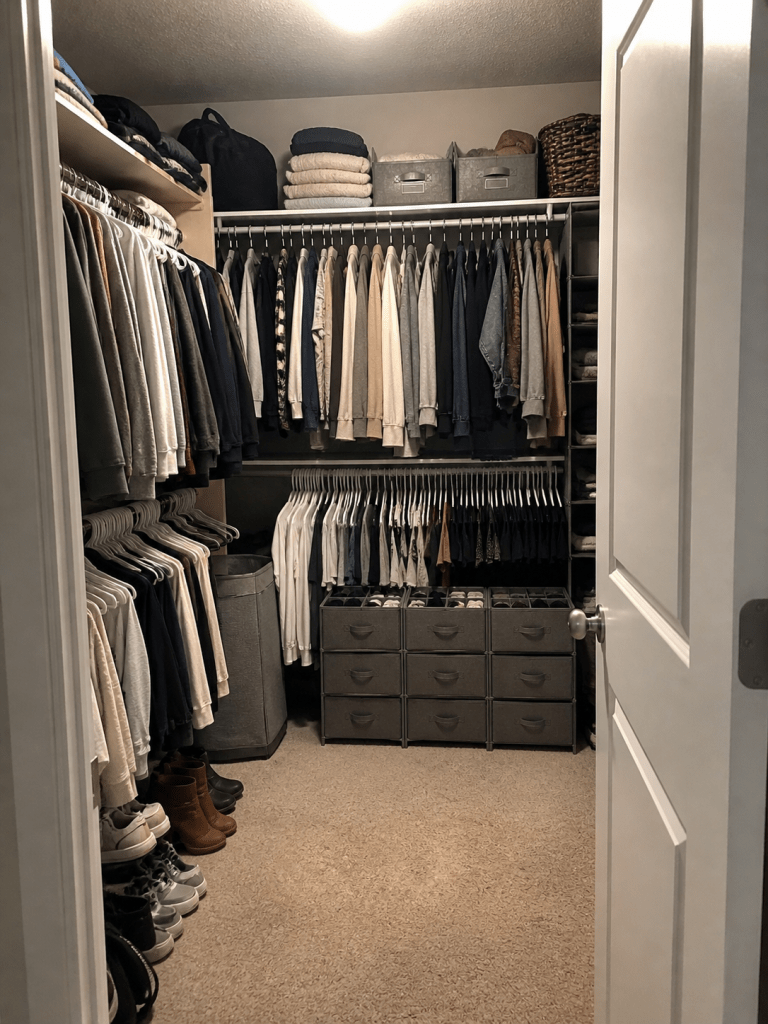
A closet that stays organized isn’t built on products alone. It’s built on a system that fits how you actually live.
When your closet is simplified, structured, and easy to reset, it stops being something you constantly manage and becomes something that supports your daily routine.
That’s what turns organization from a one-time effort into something that lasts.
Shop This Post: Closet Organization Essentials That Actually Make a Difference
| Product Image | Product Name / Price | Primary Button |
|---|---|---|
|
Hanging Organizer
|
||
|
Shoe Organizer
|
||
|
3-Tier Organizer
|
||
|
Hanging Shoe Organizer
|
||
|
Seasonal Clothes Organizer
|
||
|
Aesthetic Hangers
|
||
|
Adjustable Rod
|
||
|
Aesthetic Storage Bins
|
||
|
Under Bed Storage
|
||
|
Stackable Bins
|


If you’re building a closet that stays organized, the goal isn’t to buy more, it’s to use the right tools intentionally.
These are the exact types of products that help create structure without adding clutter:
- Amazon Basics Slim Velvet Hangers – reduce bulk and instantly create more hanging space
- ClosetMaid Adjustable Hanging Rod – doubles your hanging capacity without renovations
- Stackable Closet Drawer Organizer – turns unused floor space into structured storage
- Onlyeasy Under Bed Storage Bags – keeps seasonal clothing out of the way but accessible
- MISSLO Over The Door Hanging Organizer – adds vertical storage without taking up closet space
- StorageWorks Closet Storage Bins – keeps upper shelves clean and organized
Each of these works because it supports the system you’re building, not because it adds more storage.
Conclusion
A small apartment closet doesn’t have to feel limiting. When you stop trying to fit everything in and start designing your closet intentionally, it becomes one of the most functional spaces in your home.
By focusing on layered storage, rotation, visual simplicity, and systems that are easy to maintain, you create a closet that works with your lifestyle instead of against it.
To continue building a fully organized apartment, explore:
- Small Apartment Storage Ideas (No Closet Solutions)
- Small Kitchen Organization Ideas
- Entryway Organization Ideas
- Bathroom Organization & Space-Saving Hacks
When these spaces work together, your apartment becomes easier to manage, easier to maintain, and significantly more comfortable to live in.
Leave a Reply