This site contains affiliate links. I may earn a small commission, at no extra cost to you. Please view the disclosure for more information.
In a small apartment, your entryway and hallway are often treated as secondary spaces. They’re passed through, not designed. They’re used quickly, not thought about intentionally.
But in reality, this area has one of the biggest impacts on how your entire home feels. It’s the first thing you see when you walk in. It’s where your day begins and ends. And when it feels cluttered, that feeling carries into every other room.
When it feels clean and structured, everything else feels easier.
The challenge is that most entryways aren’t designed to support real life. They’re narrow, awkward, and often lack storage. There’s no built-in system for the things you use every day, so those items start to collect wherever there’s space. Shoes gather by the door. Bags get dropped on the nearest surface. Keys, mail, and small items spread across whatever is available.
Over time, this small area starts to influence the entire apartment. But the solution isn’t adding more. It’s making the space work better.
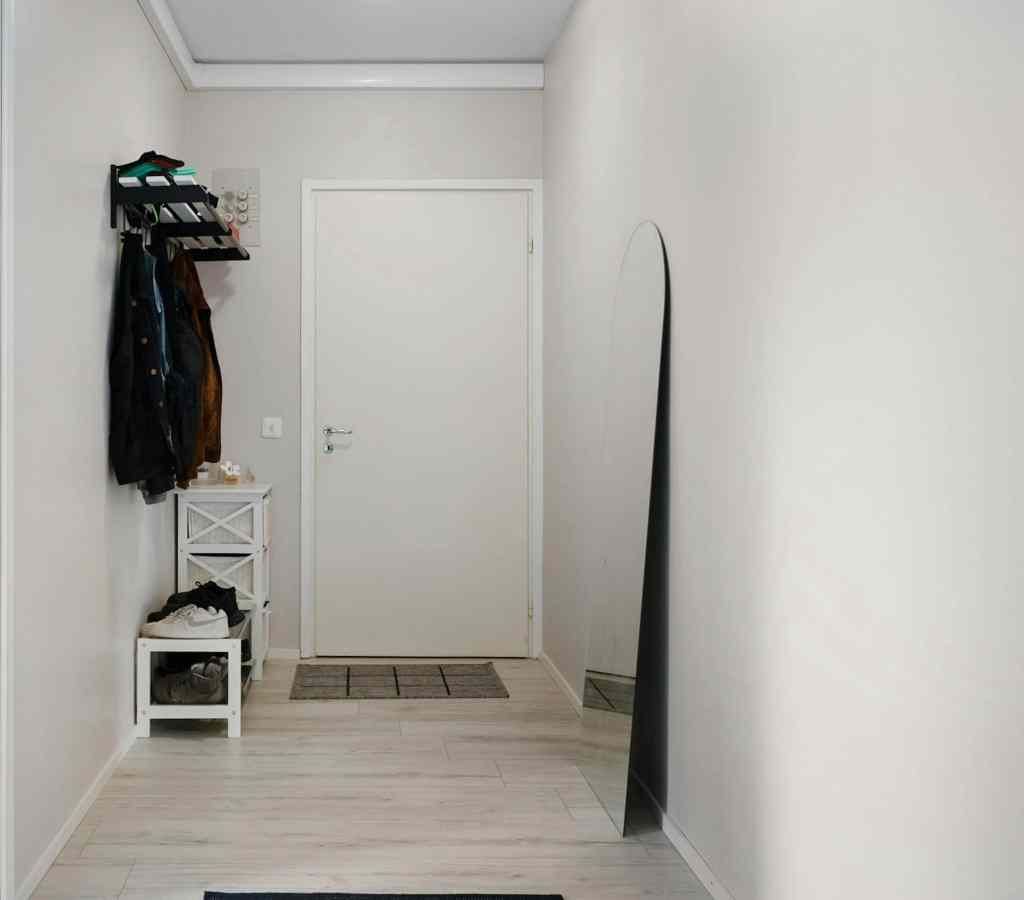
Why Small Apartments Without Entryways Feel Harder to Keep Clean
When an entryway starts to function well, it’s usually because it has a clear system behind it. Every time you walk into your apartment, you follow the same pattern. You remove your shoes, set something down, shift your belongings, and move into the rest of your home.
If there isn’t a structure for those actions, clutter builds automatically. Creating a designated landing area changes that completely. Instead of reacting to the space, the space starts to support your routine.
A small surface near the door can act as an anchor point for daily essentials. Something as simple as a tray creates a contained place for keys, mail, and small items so they don’t spread across the space. A minimal option like the Mkono decorative tray organizer works especially well because it keeps everything centralized without adding visual clutter.
Wall-mounted hooks add another layer of function without taking up floor space. They allow bags, jackets, and everyday items to stay accessible while keeping walkways clear. The goal isn’t to create a complex setup. It’s to create something that works automatically.
When each item has a defined place the moment you walk in, clutter stops at the entryway instead of moving further into your apartment.
If your space already feels overwhelming, start by simplifying first with 17 small apartment decluttering tips that actually work. Creating a system is much easier when you’re not working around excess.
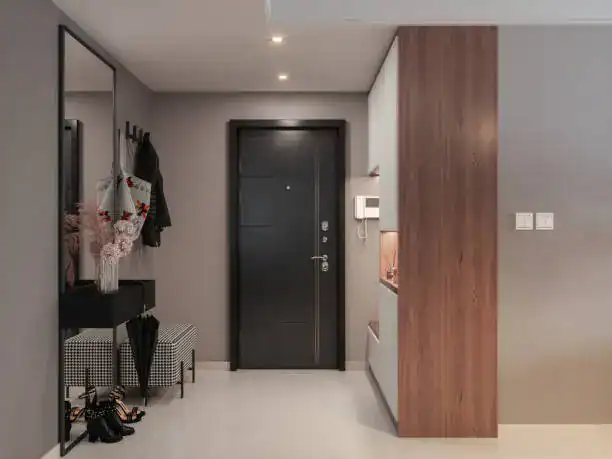
The Goal: Create a “Stopping Point” at the Door
You don’t need a hallway or a separate room to create an entryway. What you actually need is a clear stopping point.
In small apartments, the problem isn’t the lack of space—it’s the lack of a defined place where your routine begins and ends. When there’s no stopping point, everything you bring into your home continues moving with you. Shoes get kicked off wherever you pause. Bags land on chairs. Keys end up on random surfaces.
That’s how clutter spreads. A stopping point interrupts that pattern. It creates a moment where everything has a place to go immediately. The second you walk in, your items are handled instead of carried further into your space.
This doesn’t require much room. It can be a small section of wall, a narrow corner, or even just a few feet beside your door. What matters is not the size of the space, but the clarity of its purpose.
When your entry zone functions as a stopping point, it contains everything at the source. Clutter doesn’t get the chance to build elsewhere because it never leaves that area to begin with.
Over time, this becomes automatic. You stop thinking about where things go, because the system is already built into the space.
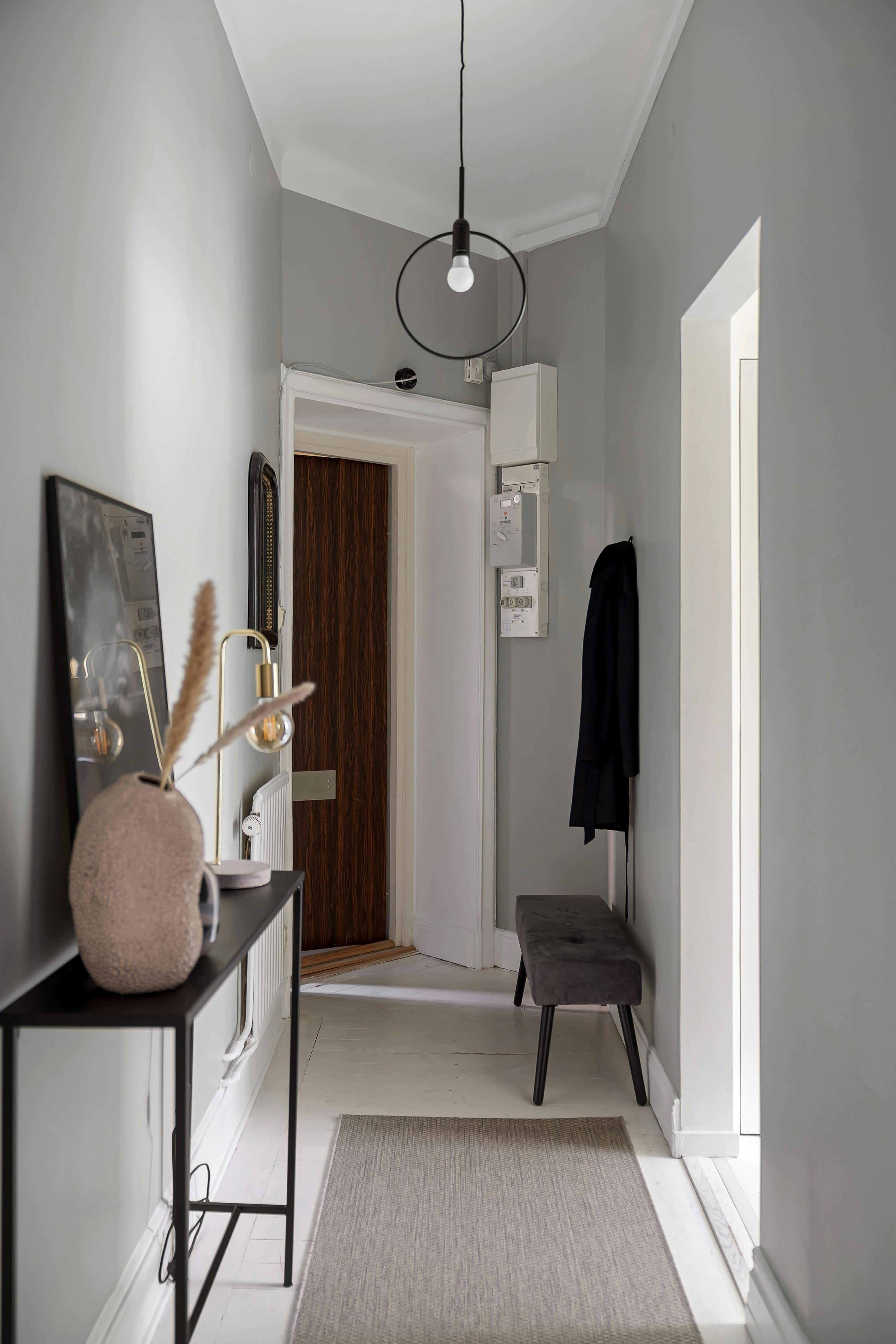
Use Vertical Space to Replace a Missing Entryway
When floor space is limited, the walls become your most valuable asset.
In apartments without a defined entryway, trying to add furniture near the door can quickly make the space feel crowded. This is where vertical storage becomes essential—not as an extra feature, but as the foundation of the system.
Using wall space allows you to store everyday items without interrupting movement through your home.
Hooks are one of the simplest and most effective ways to do this because they remove items from surfaces entirely. Bags, jackets, and frequently used items no longer compete for space on chairs, tables, or the floor.
A solution like the Sticks Wall Hook works especially well because it combines function with a clean, minimal design. It keeps everything accessible while still maintaining a streamlined look.

What makes vertical storage so effective is how it changes the feel of the space.
When items are lifted off the ground, the floor stays clear. And when the floor stays clear, your apartment instantly feels larger, cleaner, and more manageable.
The Sticks Wall Hooks gives you a place to hang bags, jackets, and everyday items without taking up any space.
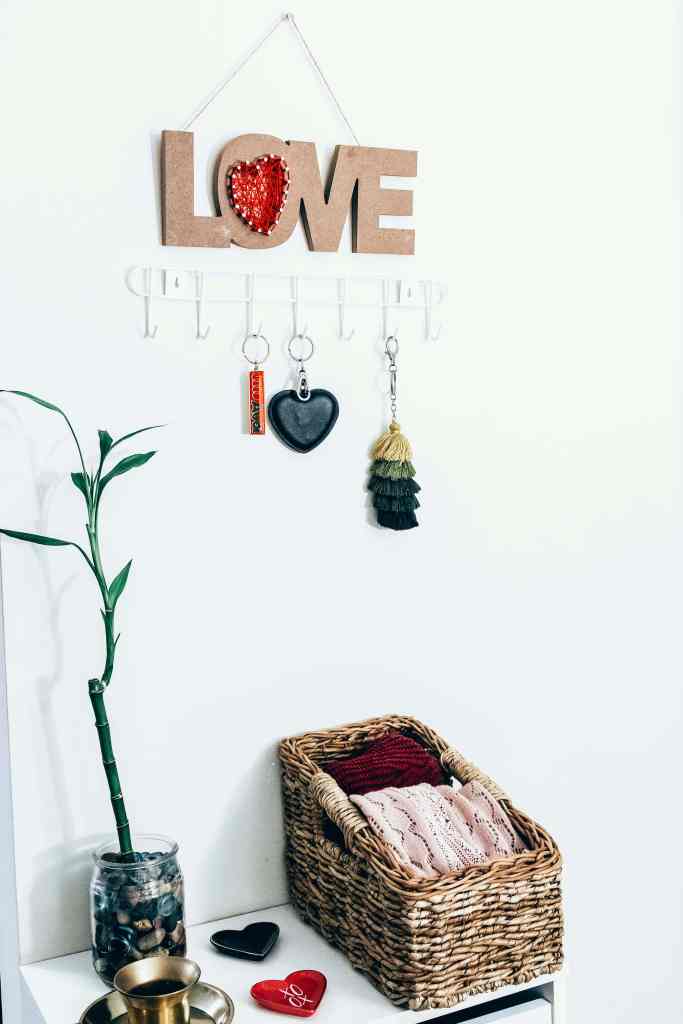
Keep Shoes From Taking Over Your Space
Shoes are one of the most common sources of clutter in apartments without entryways.
They rarely stay contained on their own. Without a designated place, they slowly spread outward from the door, creating visual clutter that makes the entire apartment feel smaller.
What starts as one or two pairs can quickly turn into a scattered collection that interrupts the flow of your space.
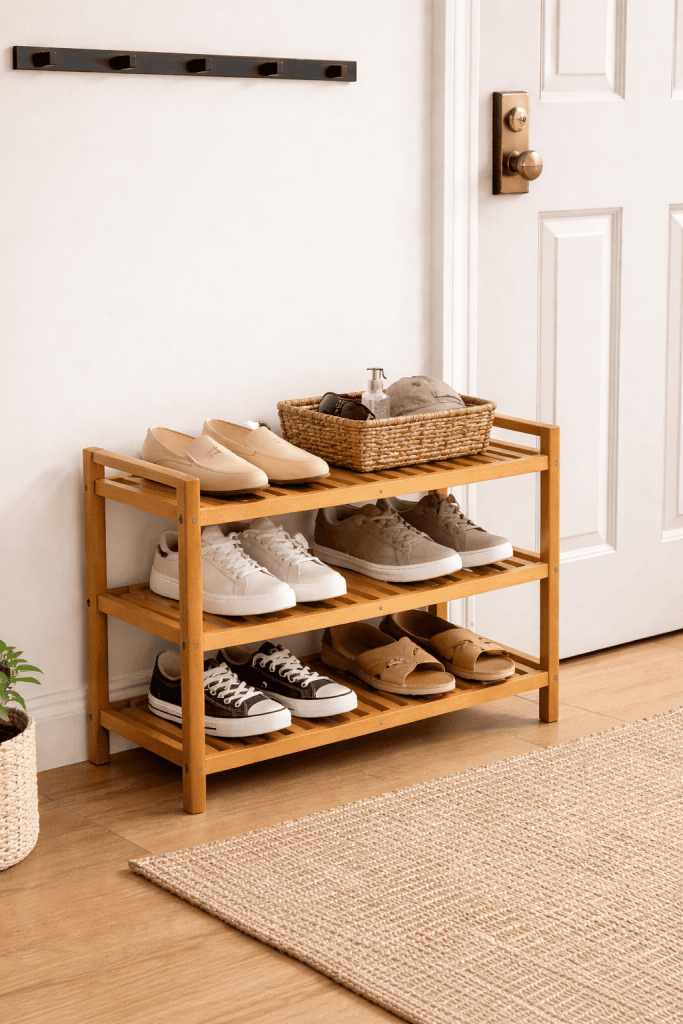
The key isn’t removing shoes entirely—it’s giving them a clear, consistent home. Even a small, defined area makes a noticeable difference.

The SONGMICS 3-Tier Bamboo Shoe Rack works well because it keeps shoes organized without adding bulk. It creates structure while still fitting comfortably into a small space.
Once shoes have a designated place, they stop spreading.
And when they stop spreading, the entry area begins to feel controlled instead of chaotic.
Create a Catch-All System That Actually Works
Small items tend to create the most frustration because they don’t feel significant on their own, but they add up quickly.
Keys, wallets, sunglasses, and mail are used constantly, which means they’re also constantly being set down. Without a designated place, they end up scattered across multiple surfaces, making the space feel disorganized even when everything else is in place.
Creating a single, consistent drop point solves this problem. Instead of searching for where things went, you always know exactly where they are. A simple tray creates that structure.
Something like the Mkono Decorative Tray Organizer works well because it contains everything in one defined space without adding visual clutter. It keeps surfaces clean while still keeping essentials easily accessible.

What makes this system effective is its simplicity.
There’s no decision-making involved. Everything goes in the same place, every time.
Use Hidden Storage to Keep Your Space Looking Clean
Even when everything is technically organized, too many visible items can make a small apartment feel cluttered. That’s where hidden storage becomes important. Instead of displaying everything, it allows you to keep necessary items nearby without overwhelming the space visually.
If you have enough room near your door, incorporating a piece that combines function with storage can make a significant difference.
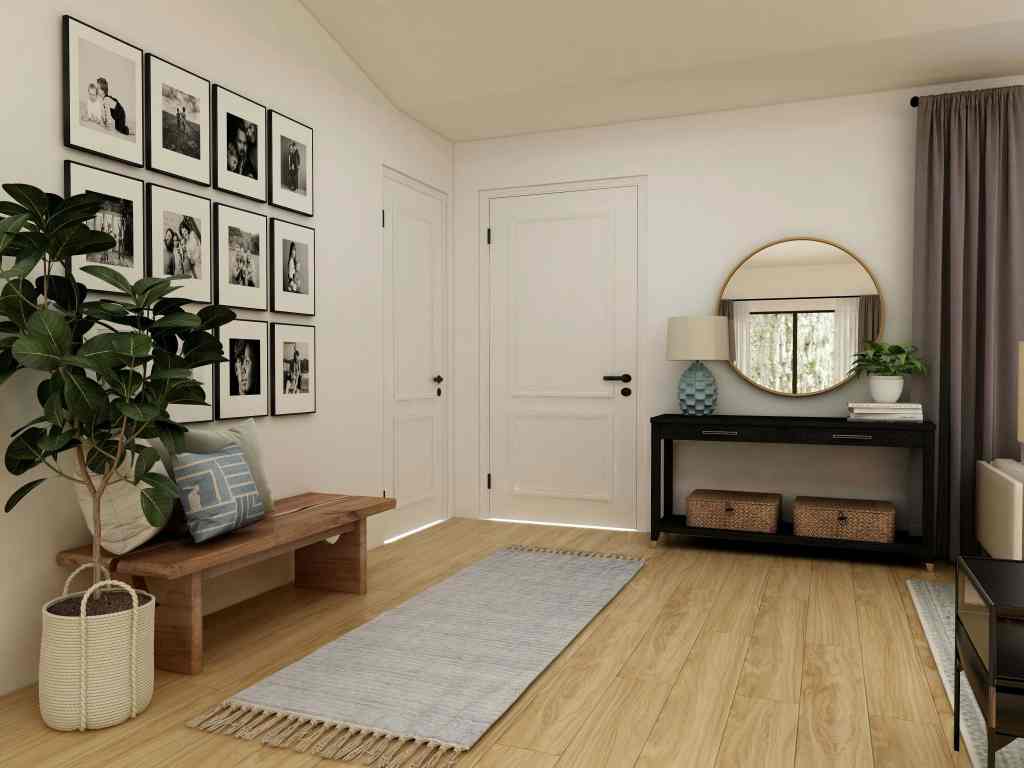
A storage bench, like the VASAGLE Storage Bench with Cushion is a strong example of this. It provides seating while also giving you a place to store shoes, bags, or seasonal items out of sight.

This creates a cleaner visual environment without sacrificing practicality.
Your space feels more open because not everything is competing for attention.
Make Use of Narrow or Overlooked Spaces
Small apartments often include awkward areas that go unused simply because they don’t seem functional at first glance.
These might be narrow gaps, small wall sections, or tight corners near the door.
Instead of ignoring these spaces, they can be used to support your entry system.
A slim solution like the Tipgo Slim Rolling Storage Cart fits into tight areas and provides additional storage without disrupting flow. It allows you to keep frequently used items accessible without leaving them out in the open.

Using these overlooked spaces effectively helps maximize what you already have.
It turns areas that would otherwise go unused into something functional and intentional.
Keep Your Entry Zone Visually Simple
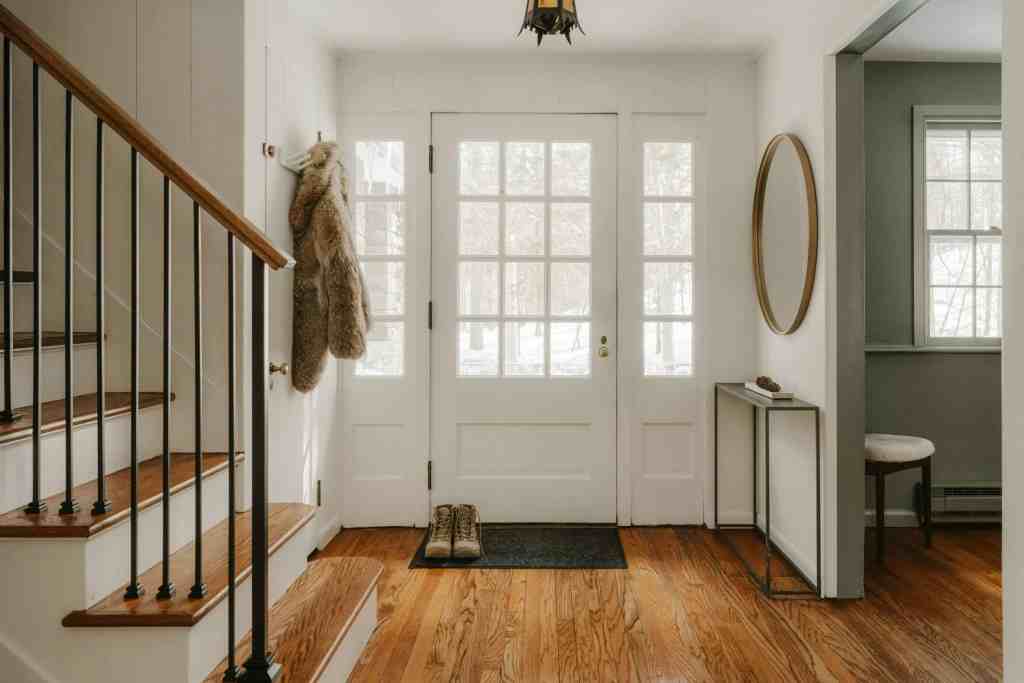
One of the biggest mistakes people make when creating an entryway in a small apartment is adding too much. Even if everything is organized, too many items in one area can make the space feel crowded. Simplicity is what keeps the system working.
When only the essentials are present, the space feels lighter, more open, and easier to maintain. Everything that belongs there serves a purpose. Everything else is stored elsewhere.
This reduces visual noise and makes the entire apartment feel more spacious.

Build a Habit That Keeps Everything in Place
No system works without consistency. Even the most well-designed entryway will start to break down if it isn’t used the same way every day. The difference between a space that stays organized and one that doesn’t usually comes down to small habits.
When you walk in, there’s always a natural sequence, setting things down, removing shoes, shifting items. When those actions happen without structure, clutter builds automatically. When each action has a designated place, the space begins to maintain itself. Placing your keys in the same spot, putting shoes away immediately, and keeping items contained takes very little time. But it prevents buildup before it starts.
The key is keeping the system simple. The easier it is to follow, the more consistent it becomes. And once it becomes automatic, your entryway stays clean without effort.
If you want to take this further, build a full system using where to put everything in a small apartment so every item in your home has a defined place.
Why This Works Even in the Smallest Apartments
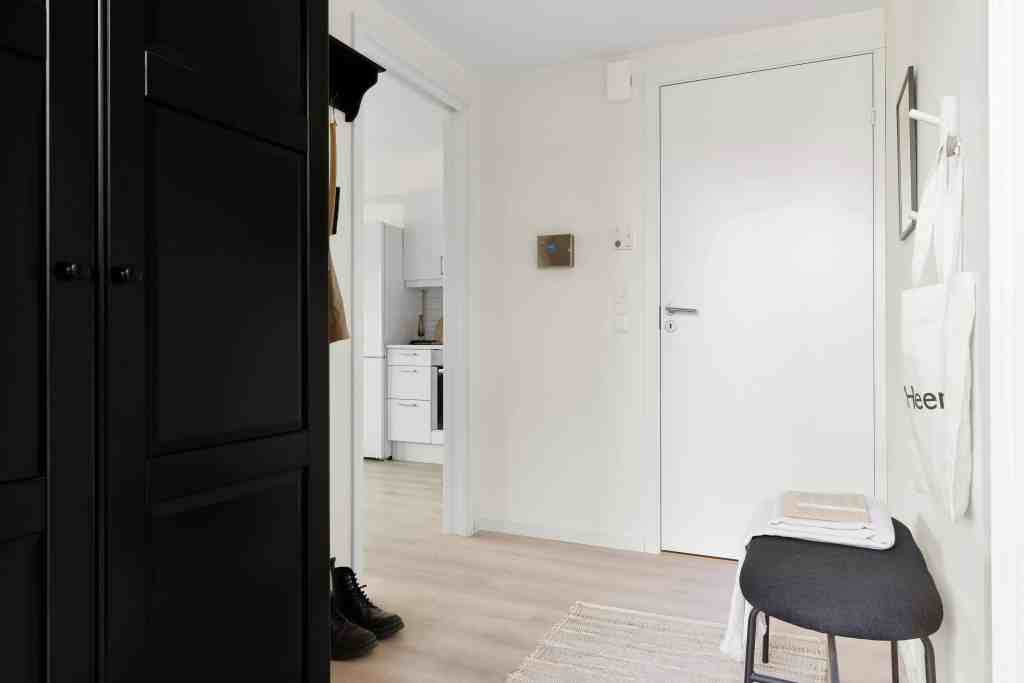
Organization isn’t about having more space, it’s about having structure. Even in the smallest apartments, creating a defined stopping point changes how everything functions. Clutter stays contained. Movement feels easier. The space becomes more predictable and manageable.
Instead of constantly reacting to mess, you’re preventing it from forming in the first place.
That shift is what makes the biggest difference.

Shop This Post: Small Apartment Entryway Essentials
This site contains affiliate links. I may earn a small commission, at no extra cost to you. Please view the disclosure for more information.
If you’re creating an entryway in a space that doesn’t have one, these simple upgrades make a huge difference:
SONGMICS 3-Tier Bamboo Shoe Rack
Mkono Decorative Tray Organizer
TIPGO Slim Rolling Storage Cart
VASAGLE Storage Bench with Cushion
These help you create structure instantly so clutter stops at the door instead of spreading through your apartment.
Conclusion: You Don’t Need an Entryway, You Need a System
Not having an entryway isn’t the problem. Not having a system is.
When everything you bring into your home has a clear place to go, your apartment becomes easier to manage, easier to clean, and easier to maintain long term.
What starts as a small change near your door quickly affects the rest of your space. When clutter is controlled at the entry point, it doesn’t spread into your living room, kitchen, or bedroom.
That’s what makes this approach so effective.
And once this system is in place, it becomes much easier to improve the rest of your apartment in the same way.
And if you want to continue improving your space, explore:
tiny apartment entryway and hallway organization which expands on how to refine this space even further, especially in narrow layouts.
small apartment storage ideas with no closet will help you create additional storage throughout your home without adding bulk.
15 genius studio apartment layout ideas that make small spaces feel bigger will help you create structure across your entire apartment so every area feels intentional.
When each space works together, your apartment stops feeling small, and starts feeling organized, functional, and easy to live in.
Leave a Reply