
This site contains affiliate links. I may earn a small commission, at no extra cost to you. Please view the disclosure for more information.
Fall naturally makes a room feel like it needs more layers. A lightweight sofa suddenly looks like it needs a throw, the bed seems more inviting with another blanket folded across the bottom, and a chair that felt finished during summer can start looking a little bare.
In a small room, however, adding softness can quickly turn into adding bulk. Too many pillows reduce the amount of usable seating. Oversized blankets can visually swallow a compact sofa. A heavily layered bed may look beautiful during the day but leave you with a pile of decorative pillows on the floor every night.
The goal is not to avoid fall layers. It is to make each layer do enough work that you do not need very many of them.
Instead of copying a heavily styled sofa or bed from a much larger room, work with the proportions of the furniture you actually have. Keep enough upholstery and bedding visible that the room still feels open, and use changes in texture, scale, and placement to create depth rather than relying on quantity.
If you are decorating the rest of your apartment for the season, SMALL APARTMENT FALL LIVING ROOM IDEAS THAT FEEL WARM WITHOUT LOOKING CROWDED can help you carry the same restraint through the living room. For broader seasonal changes, HOW TO TRANSITION A SMALL APARTMENT FROM SUMMER TO FALL WITHOUT CLUTTER is a useful companion.
Start With the Size of the Sofa Before Choosing Pillows

Before buying fall pillow covers, remove the decorative pillows from the sofa and sit down. This gives you a much better idea of how much seating you actually need to protect. If two people regularly use a small loveseat, filling both corners with large pillow arrangements will make the sofa frustrating very quickly. If you usually stretch out across one side of a three-seat sofa, that routine should influence the placement as well.
Once you understand the usable seating, begin with the largest pillows. On a compact sofa, two substantial pillows may already be enough. Place one toward each outer corner and leave the middle relatively open. If the sofa still looks unfinished, add one smaller lumbar or accent pillow rather than another pair of full-size cushions.
The difference in scale creates the appearance of layering without requiring five or six pillows.
For fall, changing covers is much easier than purchasing complete seasonal pillows. A MIULEE Velvet Soft Solid Decorative Square Throw Pillow Cover can introduce a richer texture while allowing you to reuse an insert you already own. Choose a shade that relates to the room—such as brown, olive, burgundy, rust, or warm cream—rather than assuming every pillow needs to be orange.

After arranging the pillows, sit on the sofa again. If a pillow immediately gets moved to the floor, remove it from the arrangement. A fall sofa should look comfortable because it actually is comfortable.
Build Depth With Texture Instead of More Pieces

A small room can feel richly layered with surprisingly few textiles when those textiles have noticeably different surfaces. If the sofa already has smooth upholstery, a velvet pillow beside a woven or linen-look pillow creates contrast. A knit throw adds another tactile layer without requiring additional cushions.
The important part is avoiding unnecessary duplication. Three pillows in slightly different shades but nearly identical fabrics may still look flat. Two pillows with different textures can feel much more dimensional.
Look at the furniture itself as part of the equation. A bouclé chair already contributes significant texture, so it may only need one simple pillow. A tufted sofa may look better with smoother pillow covers than with several heavily textured ones.
This is also where restraint helps the room look more polished. Instead of buying every fall texture you like, choose one noticeably soft texture and one quieter supporting texture.
If you are trying to keep the rest of the apartment from feeling visually busy,SMALL APARTMENT PRODUCTS THAT REDUCE VISUAL CLUTTER INSTANTLY connects naturally with this approach. Fewer, more distinct elements are often easier for the eye to process than several similar accessories.
Fold the Throw to Fit the Furniture

A throw blanket can make a sofa look cozy almost immediately, but the way it is folded matters in a small room.
A large blanket spread across the entire back of a loveseat can make the sofa appear smaller because most of the upholstery disappears. Instead, fold the blanket lengthwise until the visible section feels proportionate to the furniture.
On a compact sofa, drape that narrower fold over one arm and allow part of it to fall naturally toward the seat. On a larger apartment sofa, place it across one corner rather than stretching it from end to end. You want enough blanket visible to introduce softness without allowing it to become the largest object on the sofa.
For a useful fall layer, the Chanasya Super Soft Fuzzy Faux Fur Throw Blanket is an Amazon option that can add noticeable texture without requiring several decorative blankets on the sofa. Choose a warm neutral or deeper fall shade that works with the pillows already in the room, then keep this as the primary throw for the seating area. The goal is to have one blanket that looks intentional when folded over the sofa but is still comfortable enough to actually use during cooler evenings.

Once you finish styling it, look at the sofa from across the room. If the blanket dominates the furniture, fold it again. Keeping some of the original sofa visible prevents the entire seating area from feeling padded.
Let One Piece of Furniture Carry Most of the Layers
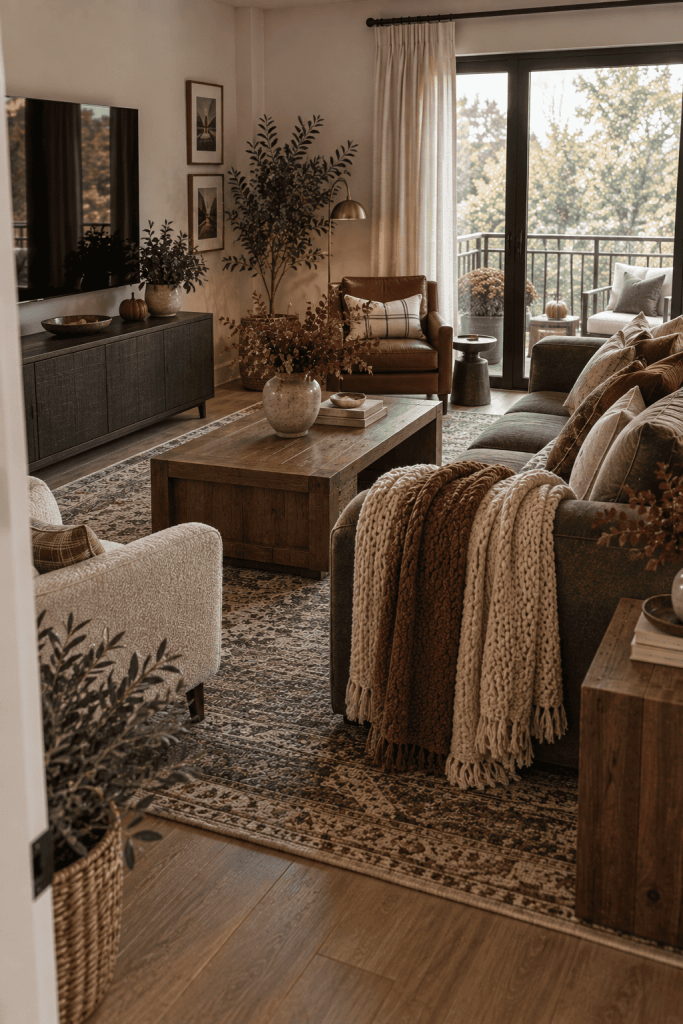
A common mistake in small rooms is layering every soft surface equally. The sofa gets a throw and several pillows. The nearby chair gets another blanket and pillow. A bench receives another folded throw. Soon the entire room is covered in textiles.
Choose one primary layering area instead. In most living rooms, that will be the sofa. Allow it to carry the most texture, then make the surrounding furniture quieter.
If the sofa has a throw and three pillows, the nearby armchair may need only one lumbar pillow. If the reading chair is where you spend most evenings, give it the useful blanket and simplify the sofa instead.
This creates visual hierarchy. It also eliminates the need for a floor basket filled with blankets that exist mainly because the room contains too many blankets to begin with. The room can feel cozy without every chair wearing its own fall outfit.
Layer the Bed Using Bedding You Already Have
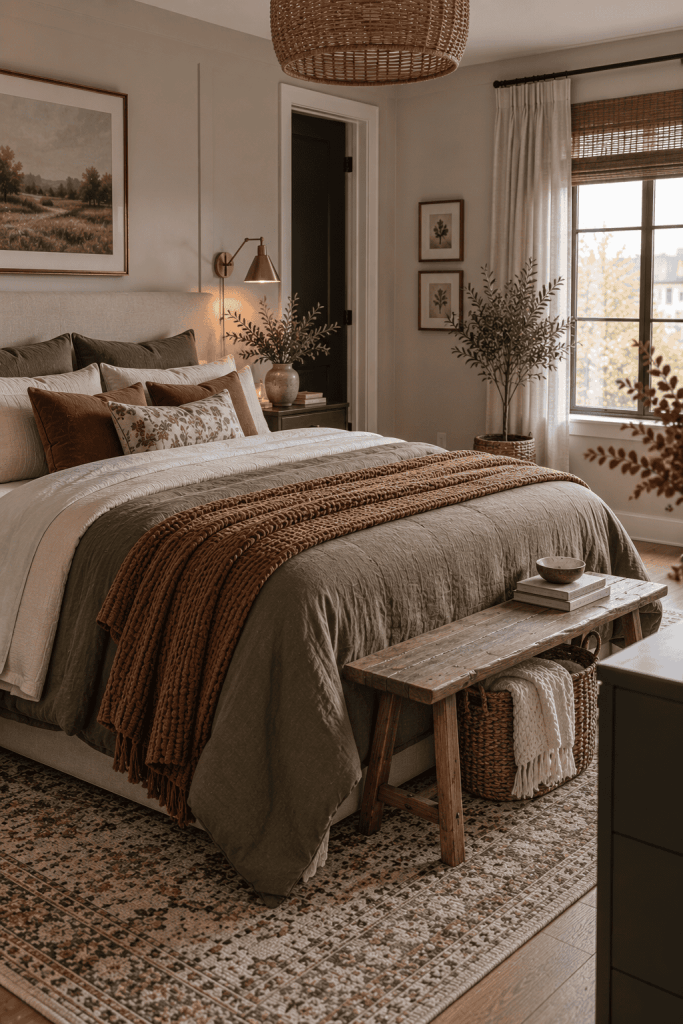
The bed already contains several layers before decorative fall styling begins. Sheets, sleeping pillows, a quilt, duvet, or comforter all contribute to how the room looks. Use those layers first. Instead of immediately adding another blanket, fold the duvet back slightly near the head of the bed so a quilt or sheet underneath becomes visible. That small change creates depth without adding anything.
If the bed still needs more fall texture, add one throw across the lower portion. Fold it relatively narrow rather than covering half the mattress. Keeping more of the main bedding visible makes a smaller bed look less heavy.
If the bed still needs another layer, the Bedsure 100% Cotton Waffle Weave Blanket is a practical Amazon option because the waffle texture adds dimension without the visual heaviness of an oversized chunky-knit blanket. Fold it into a narrower band across the lower portion of the bed rather than spreading it across the entire mattress. This keeps the main bedding visible while giving the bed enough texture to feel warmer for fall.

If your bedroom already struggles with storage, resist adding decorative blankets that need somewhere to go at night. Bedroom Storage Ideas for Small Apartments (Maximize Every Inch Without Clutter) is a better place to address those underlying space issues.
Keep Decorative Bed Pillows Realistic

Before adding another decorative pillow to the bed, decide where it will go while you sleep. If the answer is the floor, reconsider whether you need it. Sleeping pillows can be part of the styling. Arrange them neatly against the headboard, then place one lumbar pillow or one smaller decorative cushion in front.
That may be enough to make the bed feel finished. If you prefer a fuller look, use one pair of decorative pillows rather than several rows. Varying the size slightly creates depth without requiring a large quantity.
The goal is a bed you can reset quickly in the morning and use easily at night. Fall styling should make the bedroom feel more inviting, not add another daily chore.
Frequently Asked Questions About Fall Pillows and Blankets
How many pillows should a small sofa have?
The sofa should retain enough space to sit comfortably without moving pillows first. For many compact sofas, two larger pillows and one smaller accent are plenty, although the correct number depends on the sofa’s dimensions and how it is used.
How should you style a blanket on a small sofa?
Fold the blanket lengthwise to reduce its visible width, then drape it over one arm or corner. Keep a significant amount of the sofa upholstery visible so the blanket feels like a layer rather than a cover.
How do you make a bed look cozy without too many pillows?
Use the bedding itself to create depth. Fold the duvet back slightly, expose part of a quilt or sheet beneath it, and add one narrow throw at the foot of the bed. Sleeping pillows plus one decorative lumbar cushion may be all the bed needs.
What fall pillow colors work in a small neutral room?
Olive, chocolate brown, burgundy, plum, muted rust, camel, warm cream, and tobacco tones can introduce fall depth without relying entirely on orange. Choose a color that already relates to another element in the room.
Conclusion
Layering blankets and pillows for fall is less about adding more and more about arranging what you have with greater intention.
Start with the size of the furniture. Protect the seating you actually use. Allow differences in pillow size and texture to create depth instead of relying on quantity. Fold blankets according to the scale of the sofa or bed, and let one piece of furniture carry most of the room’s softness.
Most importantly, test the arrangement by living with it. Sit on the sofa. Use the blanket. Go to bed without creating a pile of decorative pillows on the floor.
If the room still works comfortably, the layers are doing their job.
For more seasonal decorating ideas that follow the same small-space approach, continue with BEST FALL DECOR FOR SMALL APARTMENTS THAT DOESN’T TAKE UP TOO MUCH SPACE and EARLY FALL DECOR IDEAS FOR SMALL APARTMENTS THAT FEEL COZY
A small room does not need many layers to feel ready for fall. It needs the right layers in the right places.
Leave a Reply