This site contains affiliate links. I may earn a small commission, at no extra cost to you. Please view the disclosure for more information.

Decorating a small apartment living room can feel limiting at first. When you’re working with a smaller footprint, it is easy to assume that your space will always feel cramped or that you have to sacrifice comfort or style to make everything fit.
But the truth is, the size of the room is rarely the real issue. What makes a living room feel small is usually how the space is being used.
A room that feels cluttered, heavy, or closed in, is often the result of too many competing elements, poor furniture choices, or a layout that interrupts the natural flow of the space. When those things are corrected, even the smallest living room can feel open, balanced, and thoughtfully designed.
In many ways, small apartments create better design opportunities. They force you to be more intentional with your space. Every item has a purpose and every detail contributes to how the room feels.
Instead of filling your small space, you are shaping it. And once you start thinking that way, your entire approach to decorating will change.
1. Use Light Colors to Make the Room Feel Larger
One of the most important shifts you can make in a small living room is simplifying the visual experience of the space. When too many colors, textures, or shapes compete for attention, the room immediately feels tighter because your eye does not know where to land. This causes everything to feel crowded, even if there is not that much furniture.
Creating a lighter, more cohesive color palette is one of the easiest ways to fix this. When walls, furniture, and decor stay within a similar tonal range, the space feels continuous which makes a room feel larger. Instead of your eyes jumping from one contrasting element to another, they will move smoothly across the room.
Lighter shades such as warm whites, soft beiges, muted greens, and light grays reflect light and open up the space visually. They can also create a calm foundation that allows other elements, like texture and shape, to stand out in a more subtle, refined way.
This does not mean the room has to feel flat or boring. Depth can still be created through layered materials such as a linen sofa, a woven rug, soft cotton throws, and natural wood tones. These elements all add richness without overwhelming the space.
A small amount of contrast can still be effective, but it should feel intentional rather than dominant. A darker frame, a single accent pillow, or a sculptural object can ground the room without closing it in.

SOURCE: Harlow James
2. Choose Apartment Sized Furniture
It’s not just about whether something fits. It’s about how it feels in the space. Bulky furniture with thick arms, deep cushions, and heavy bases can make a room feel significantly smaller than it actually is. Even when the dimensions technically work, the visual weight of those pieces can overwhelm the layout.
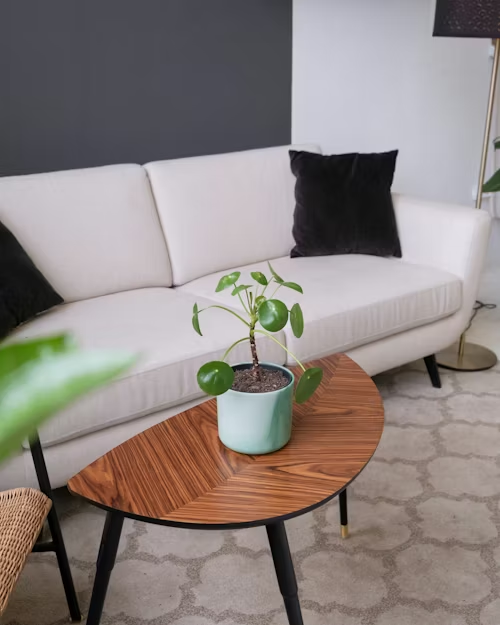
Choose furniture with a lighter profile and it will change everything. Sofas with clean lines, slimmer arms, and slightly raised legs, allow light to pass through the room more easily. This creates a sense of openness that heavier furniture simply does not allow.
A compact sofa designed for small spaces, like the Loveseat Sofa or a small convertible sectional similar to the HONBAY compact designs work well because it provides comfort without dominating the room. These types of pieces are popular in apartments for a reason. These pieces balance proportion and functionality in a way that larger furniture often can’t.
Spacing also plays a bigger role than most people realize. In small rooms, there is a tendency to push everything against the walls to create more floor space. But when everything is lined up around the edges, the room can feel flat and uninspired.
Pulling furniture slightly away from the walls, even by a few inches, creates breathing room. It also helps define the layout more clearly, which can make your space feel intentional instead of forced.
3. Use Vertical Storage
When floor space is limited, the way you use your walls becomes incredibly important. A small living room does not need more furniture, it needs better use of vertical space.
When everything is concentrated at a lower level, the room feels visually heavy. But when storage and decor extend upward, the eye is naturally drawn higher. This makes the ceilings feel taller and the room feel larger.
Floating shelves are one of the simplest ways to achieve this. They provide storage and display space without adding bulk. Tall bookcases and ladder shelves can also work well, especially when styled with restraint.
The key is avoiding overcrowding. Filling every inch of your vertical shelf space defeats the purpose. Leaving gaps between objects creates a more curated look and prevents the room from feeling cluttered again.
This is where thoughtful styling becomes just as important as the furniture itself. A few well-placed books, a small plant, and a decorative object can create more impact than an entire shelf packed with items.

4. Add Mirrors to Reflect Light
Light plays a defining role in how a small living room feels. Natural light, when used correctly, can completely transform a space. But even if your apartment does not get a lot of sunlight, you can still enhance the light you do have.
One of the most effective ways to do this is by using reflections. Mirrors can help distribute light throughout your room while also creating the illusion of depth. When placed across from a window or near a light source, they amplify brightness and make the space feel more open.
A larger mirror tends to work better than multiple smaller ones because it creates a stronger visual impact. Something like the NeuType full-length mirror is especially effective in smaller apartments because it serves more than one purpose. It functions as decor, enhances light, and adds a sense of depth. All without taking up any of your needed additional space.
Instead of adding more items to the room, you are choosing pieces that work harder for you.

Source: Our Rosebury Home
5. Choose a Large Area Rug
The way your seating area is grounded also plays a major role in how the room feels. Rugs are often overlooked, but they have a powerful effect on the layout. A rug that is too small makes everything feel disconnected. Each piece of furniture appears to exist on its own, which breaks up the space and makes it feel smaller.
A properly sized rug brings everything together. When at least the front legs of your sofa and chairs sit on the rug, the seating area becomes unified. This creates a defined zone within the room and gives the layout a sense of structure.
In open-concept apartments, this becomes even more important. Without clear boundaries, spaces can start to feel chaotic. A rug helps establish where the living area begins and ends without the need for physical dividers.
A neutral, textured rug, like a Moroccan-style design, adds warmth while still keeping the overall look cohesive.

6. Keep Decor Minimal
One of the biggest differences between a small space that feels styled and one that feels cluttered is how decor is used. Clutter isn’t always about having too much, it’s often about having too many small, competing elements.
When every surface is filled with smaller objects, the room starts to feel busy and overwhelming. Shifting toward fewer, larger pieces creates a completely different effect. An oversized piece of artwork, a sculptural lamp, or a set of textured pillows can carry more visual weight than multiple smaller decorations. This approach simplifies the room while still allowing it to feel personal and styled.
It also creates a sense of intention. Instead of the room feeling like a collection of items, it will feel like a curated space.

7. Use Multi-Functional Furniture
In small apartments, functionality matters just as much as aesthetics. The more each item can do, the less you will need overall. Every item should contribute to both the look and usability of the space.
That’s where multi-functional furniture becomes essential.
A storage ottoman, for example, can act as seating, a surface, and hidden storage all at once. Pieces like the BLEXA round storage ottoman are especially useful because they help eliminate visible clutter without adding bulk to the room. This is one of the easiest ways to make a small space feel more organized without sacrificing comfort.
Instead of needing multiple pieces to serve different purposes, you’re simplifying the room with fewer, more effective items. This approach not only saves space but also makes the room easier to maintain.

8. Add Floor Lamps Instead of Table Lamps
Lighting is another thing that often gets overlooked in small living rooms. Lighting has a subtle but powerful effect on how a room feels. Table lamps, while useful, can take up valuable surface space. In a smaller room, that space is better used for functionality or left clear to reduce clutter.
Floor lamps offer a more efficient solution. They provide light without cluttering surfaces, and they also add height to the room, which enhances the overall sense of space.
A slim, vertical design like the Dimmable Brightech Sky LED floor lamp works particularly well because it delivers strong ambient lighting without feeling heavy or intrusive.
Layering your lighting by combining your overhead light with a floor lamp, also makes the room feel warmer and more inviting. It also makes the room feel more complete.

9. Create Zones in Open Living Spaces
Many small apartments combine the living room, dining area, and kitchen into one open space. In open layouts, where the living room flows into the kitchen or dining area, creating structure becomes essential.
While this can feel airy, it can also feel undefined. Without clear structure, the space starts to feel cluttered even if it’s not. Creating subtle zones helps bring order to the layout. This doesn’t mean you need walls or dividers.
This can be done through furniture placement, rugs, or even lighting. Subtle design choices can create natural separation.
For example, positioning your sofa to face inward instead of pushing it against the wall can help define the living area. A rug underneath reinforces that boundary, making the space feel intentional rather than scattered. This balance between structure and flow is what makes small apartments feel both functional and spacious.

Before You Add Anything, Remove What You Don’t Need
The most effective way to improve a small living room is not by always adding something new. It is by simply reducing what is already there and often even removing what is not working. Clearing surfaces, reducing excess furniture, and simplifying decor can create immediate breathing room.
Once the space feels open, it becomes easier to design it intentionally. Instead of trying to fix a crowded room by adding more, you’re starting from a place of clarity.
Final Thoughts
A small apartment living room doesn’t have to feel like a limitation. When you focus on light, proportion, layout, and intentional design, the space begins to work with you instead of against you.
The goal is not to make the room bigger by throwing everything away. It’s to make the space feel better. When every element has a purpose and the space feels balanced, even the smallest living room can feel calm, functional, and beautifully put together.
If you’re starting to rethink your space, the next step is making sure everything in your home works together, not just your living room. If storage is still a challenge, you can build on these ideas with small apartment storage solutions that help you maximize every inch without adding clutter. If your layout still feels off, studio apartment layout ideas break down how to arrange furniture in a way that makes your space feel larger and more intentional.
If your goal is to keep your space feeling this way long-term, your daily habits matter just as much as your design. Small apartment cleaning routine will help you maintain a clutter-free space in just a few minutes each day, so your living room continues to feel open and organized without constant effort.
The more that each area of your home works together, from layout to storage to daily systems, the easier it becomes to create a space that not only looks good, but actually supports the way you live.
Let me know what you think of these ideas in the comments!
Leave a Reply